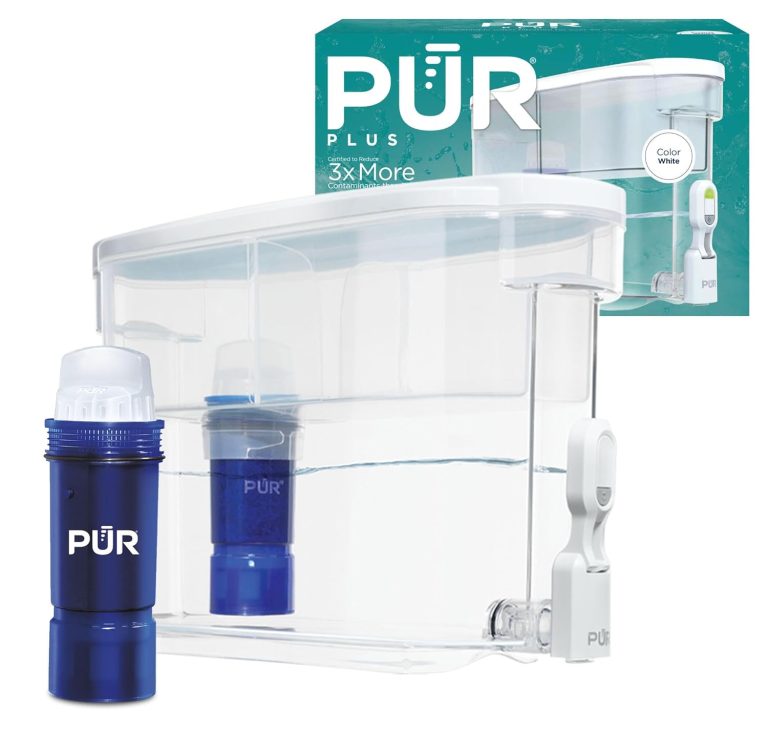
Epic Pure Countertop Water Filter Dispenser for Drinking Water. 36 Cup 150 Gallon Filter. BPA Free Removes Fluoride, Chlorine, Lead Water Purifier Large Water Jug Dispenser Review
The Epic Pure countertop dispenser is a 36-cup, gravity‑fed jug that uses a solid carbon block cartridge to reduce chlorine, certain heavy metals and some targeted contaminants while leaving beneficial minerals intact. It’s BPA‑free, portable with no plumbing or electricity required, and the filter cartridge is rated for roughly 150 gallons with a 90‑day LED reminder for replacements. Expect improved taste and odor for municipal tap water, slower flow compared with pressurized systems, and ongoing cartridge costs.
Design and Build Quality
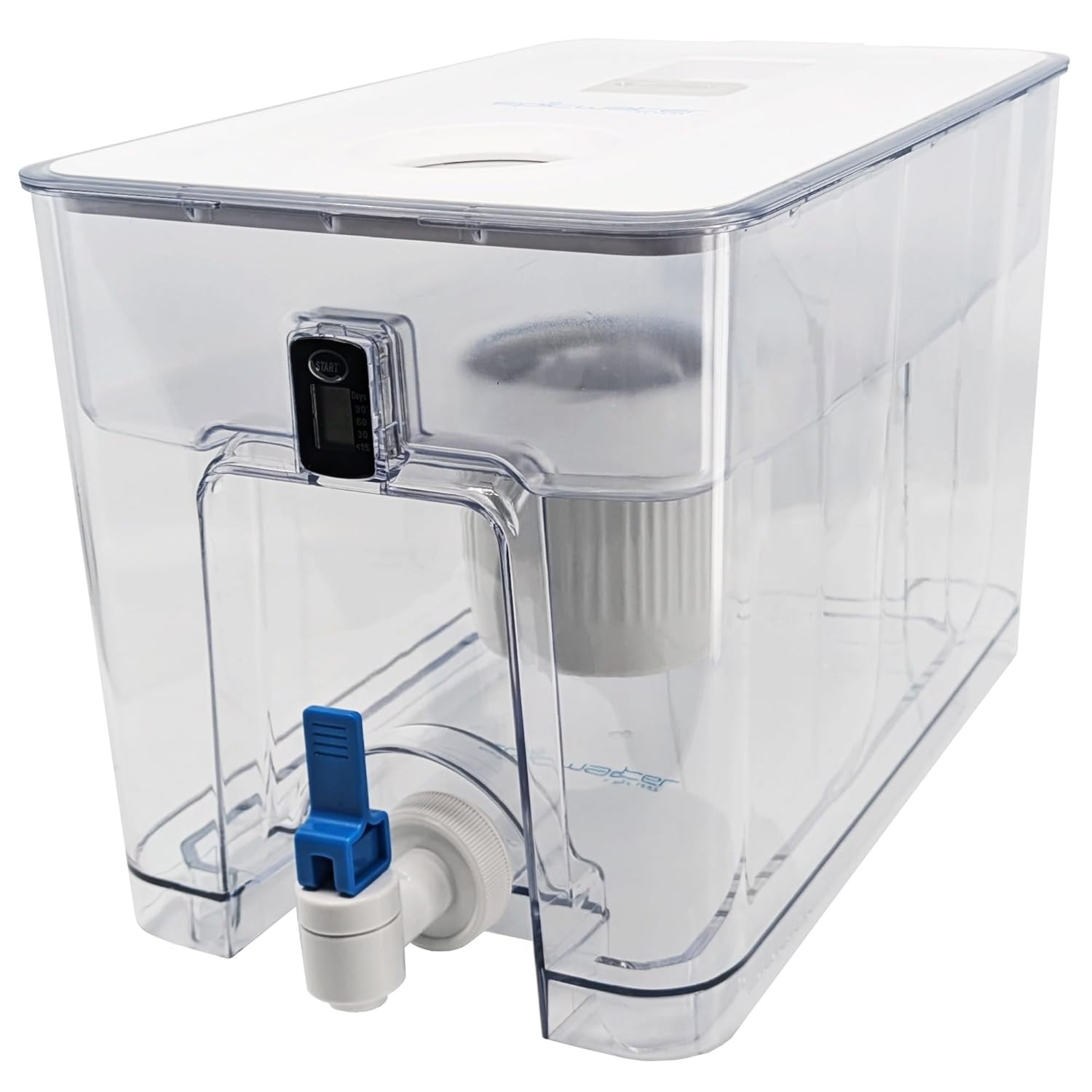
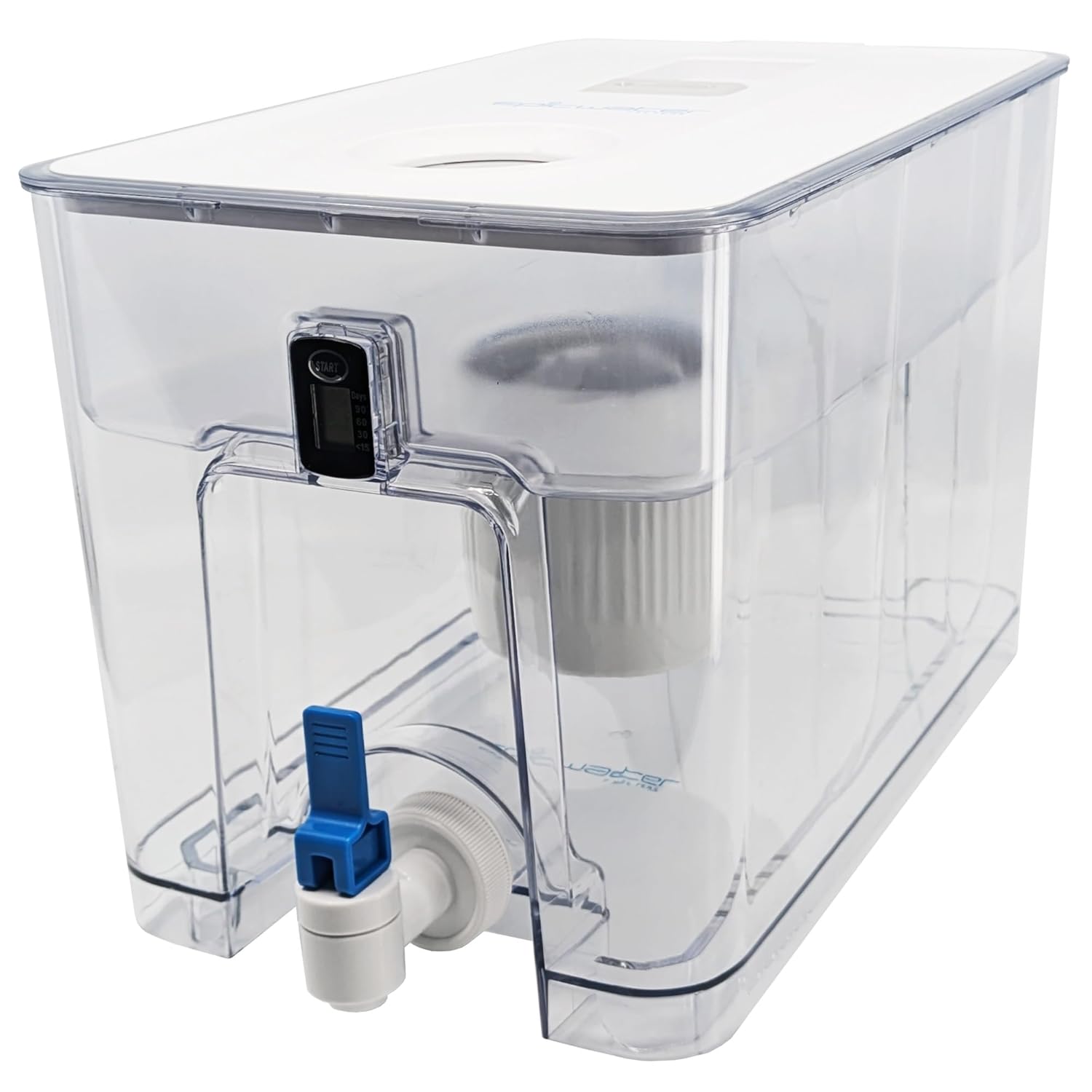
The dispenser is a compact, rectangular jug designed to sit on a countertop or a refrigerator shelf without taking up excessive space. Its 36‑cup (about 2.25 gallons / ~8.5 liters) capacity makes a full unit substantially heavier than a single‑use pitcher, so it’s more practical to store in place than to carry frequently.
Exterior and user‑touch components are made from food‑grade materials and advertised as 100% BPA‑free. The housing feels firmer and more substantial than thin‑plastic pitchers, and the internal filter is a dense solid carbon block rather than a loose or thin cartridge media.
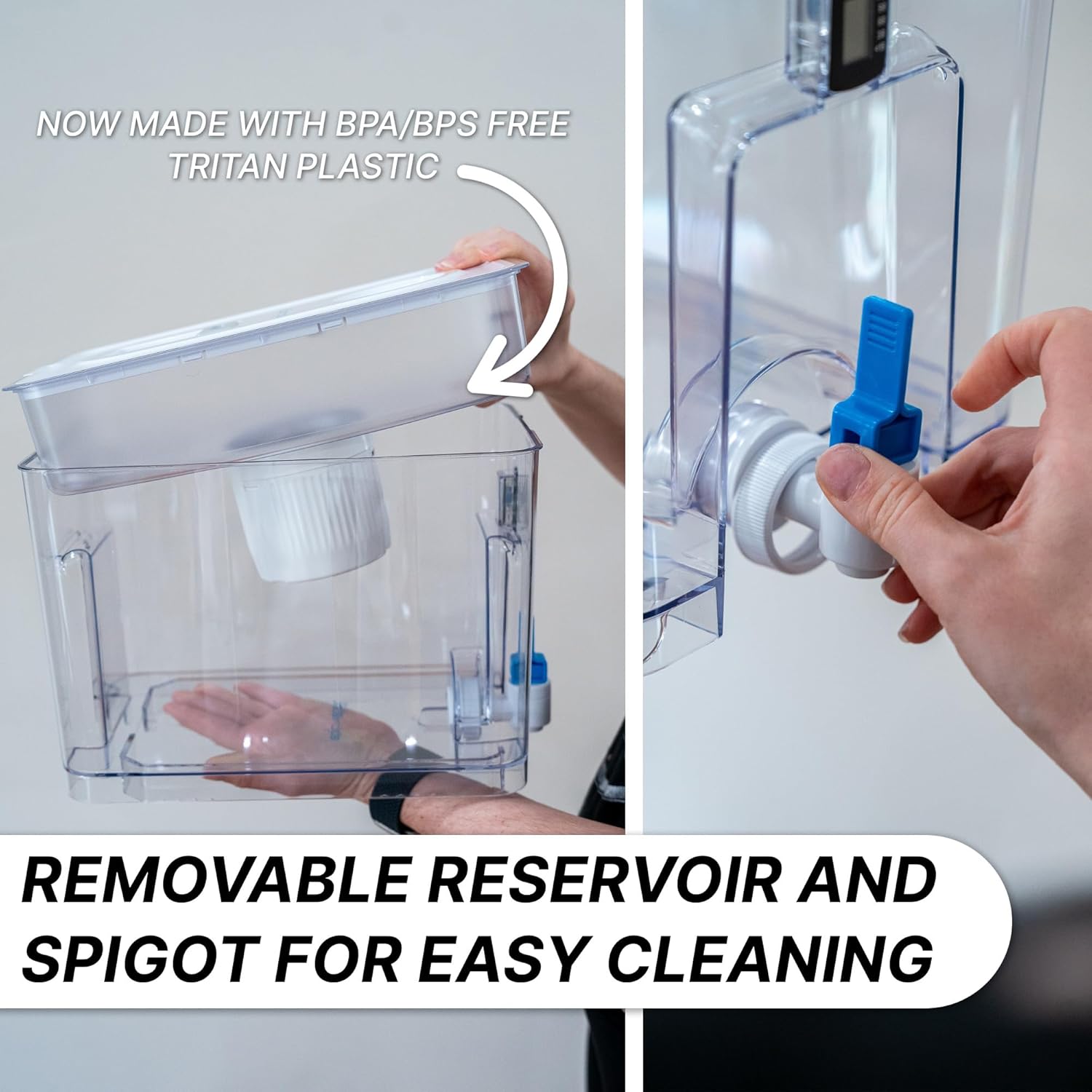
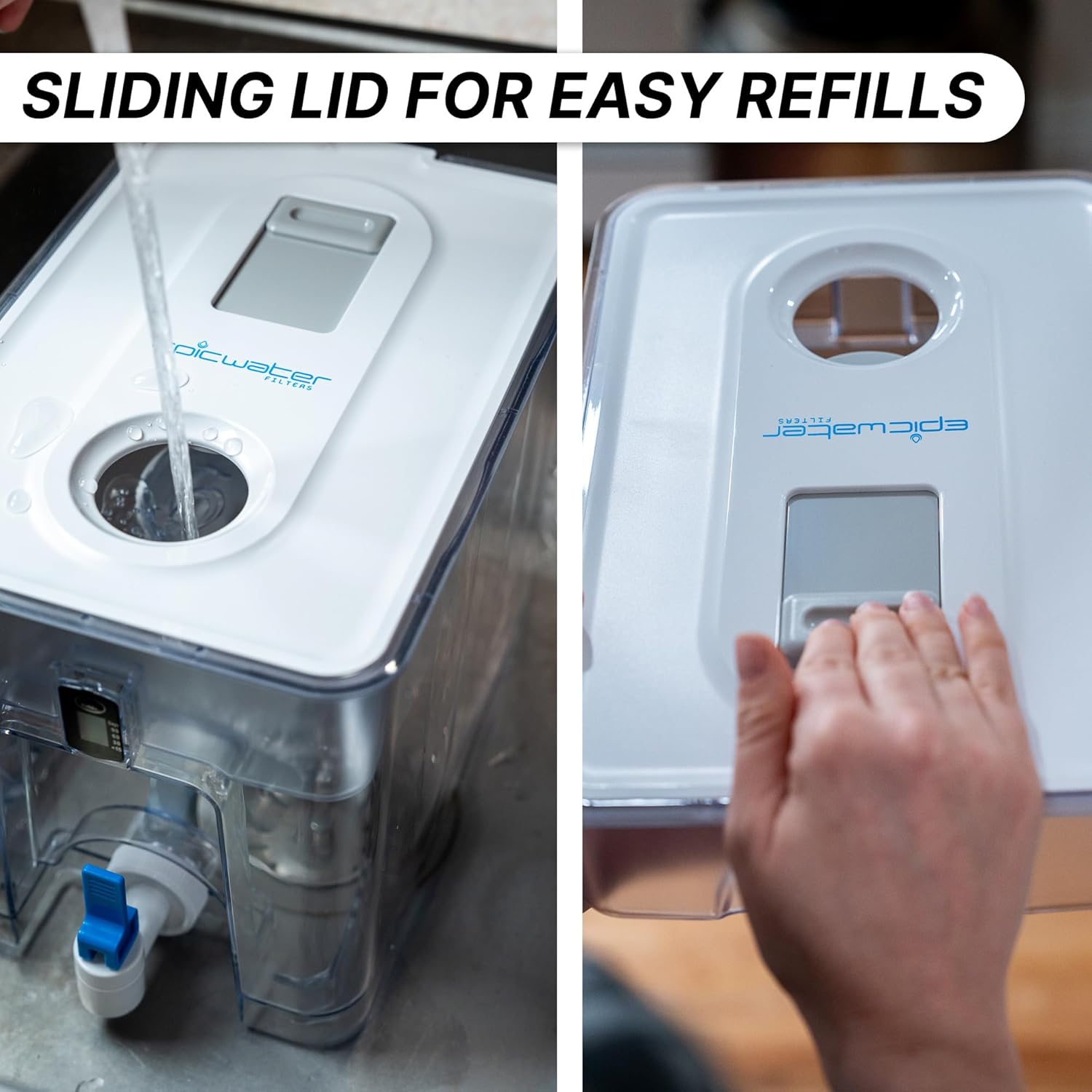
Refills are straightforward: the lid lifts off for filling and cleaning, and the spout is shaped to reduce drips. Styling is neutral and utilitarian, intended to blend into most kitchens rather than act as a decorative piece.
Key Features and Functionality
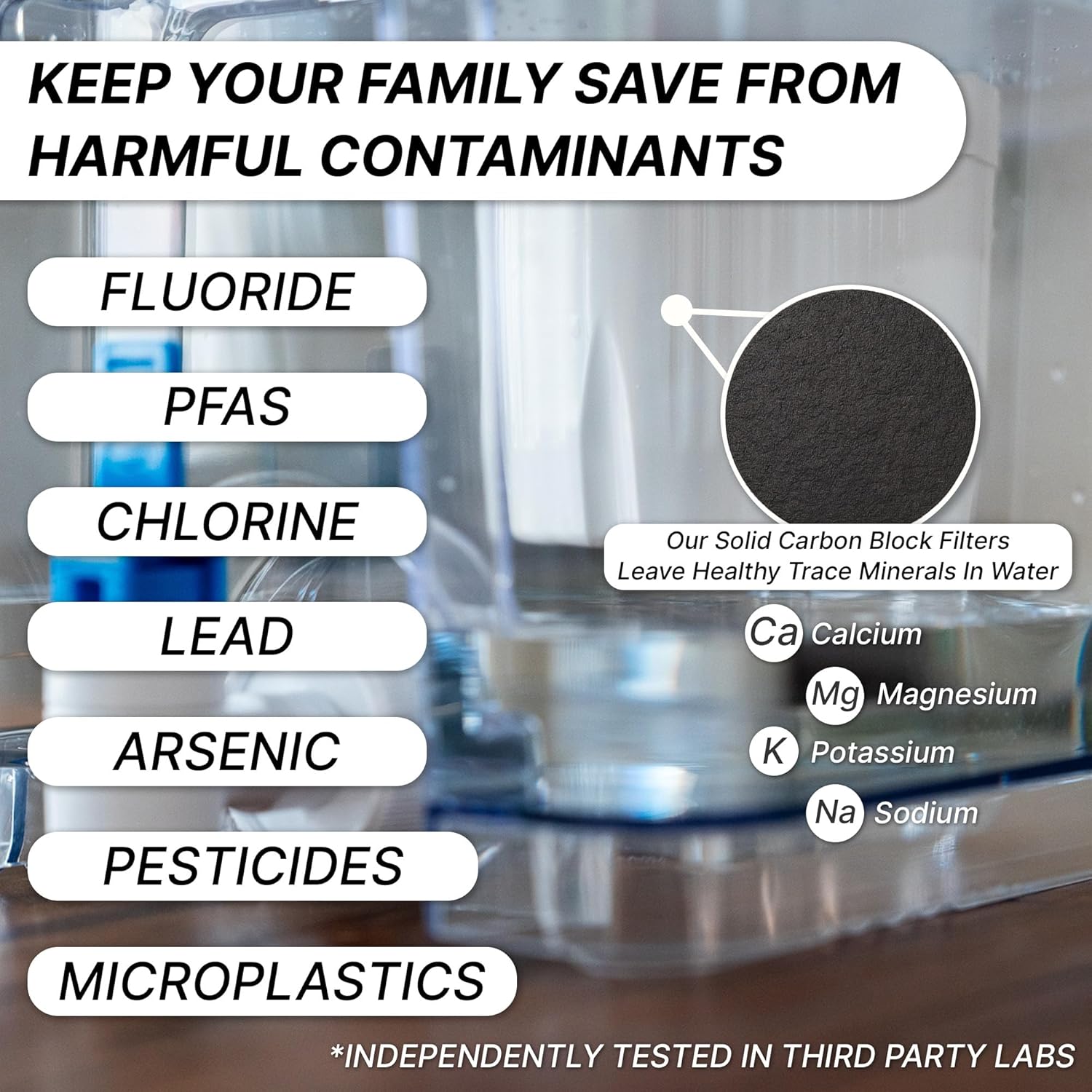
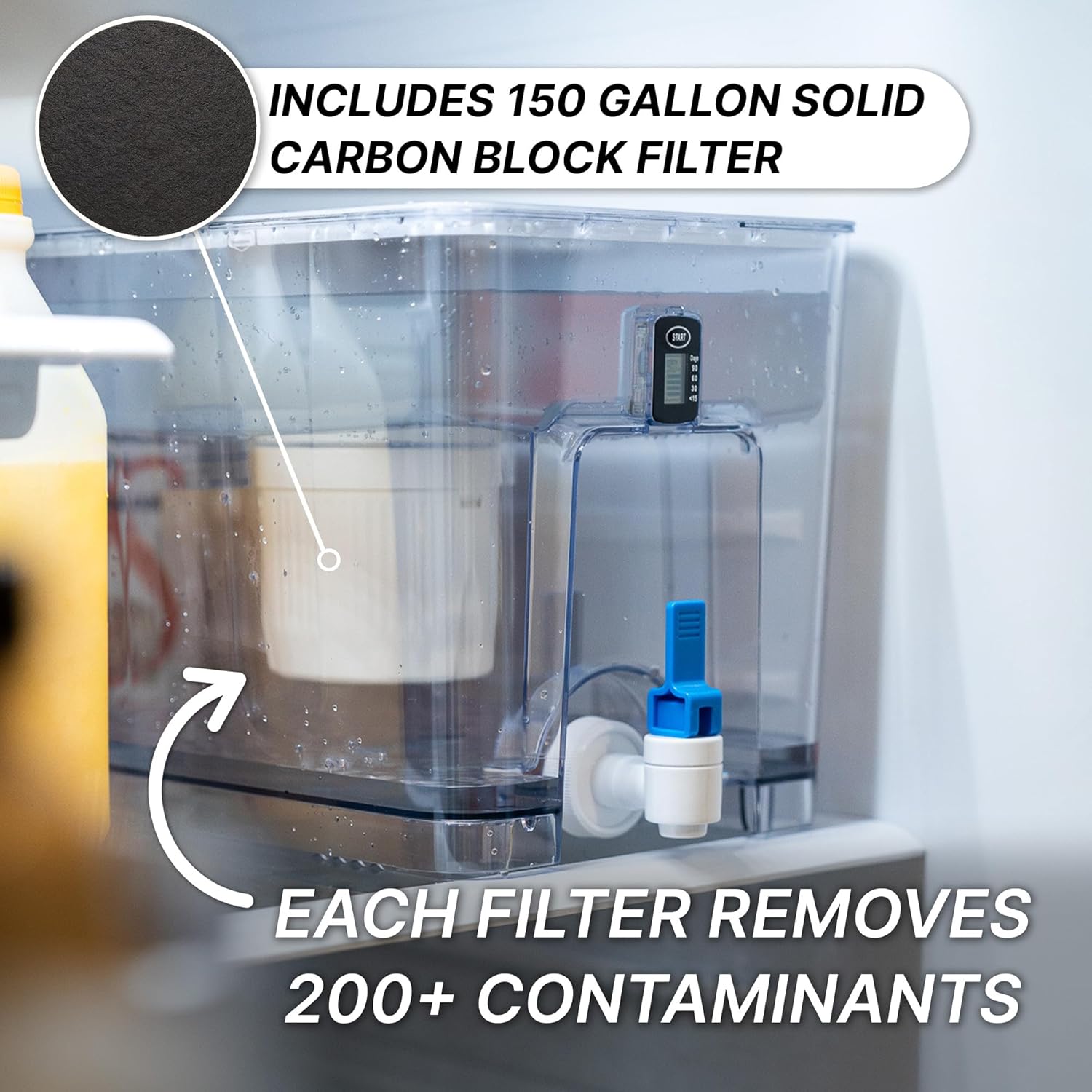
The system uses a solid carbon block cartridge designed to reduce a range of chemical contaminants and some heavy metals while leaving beneficial minerals such as calcium and magnesium in the finished water. Certain cartridge variants are also marketed to target fluoride.
This is a gravity‑fed countertop dispenser—no plumbing, installation or electricity required—so it’s easy to place on a counter or move between locations. The jug’s 36‑cup capacity serves families or small offices without constant refilling.
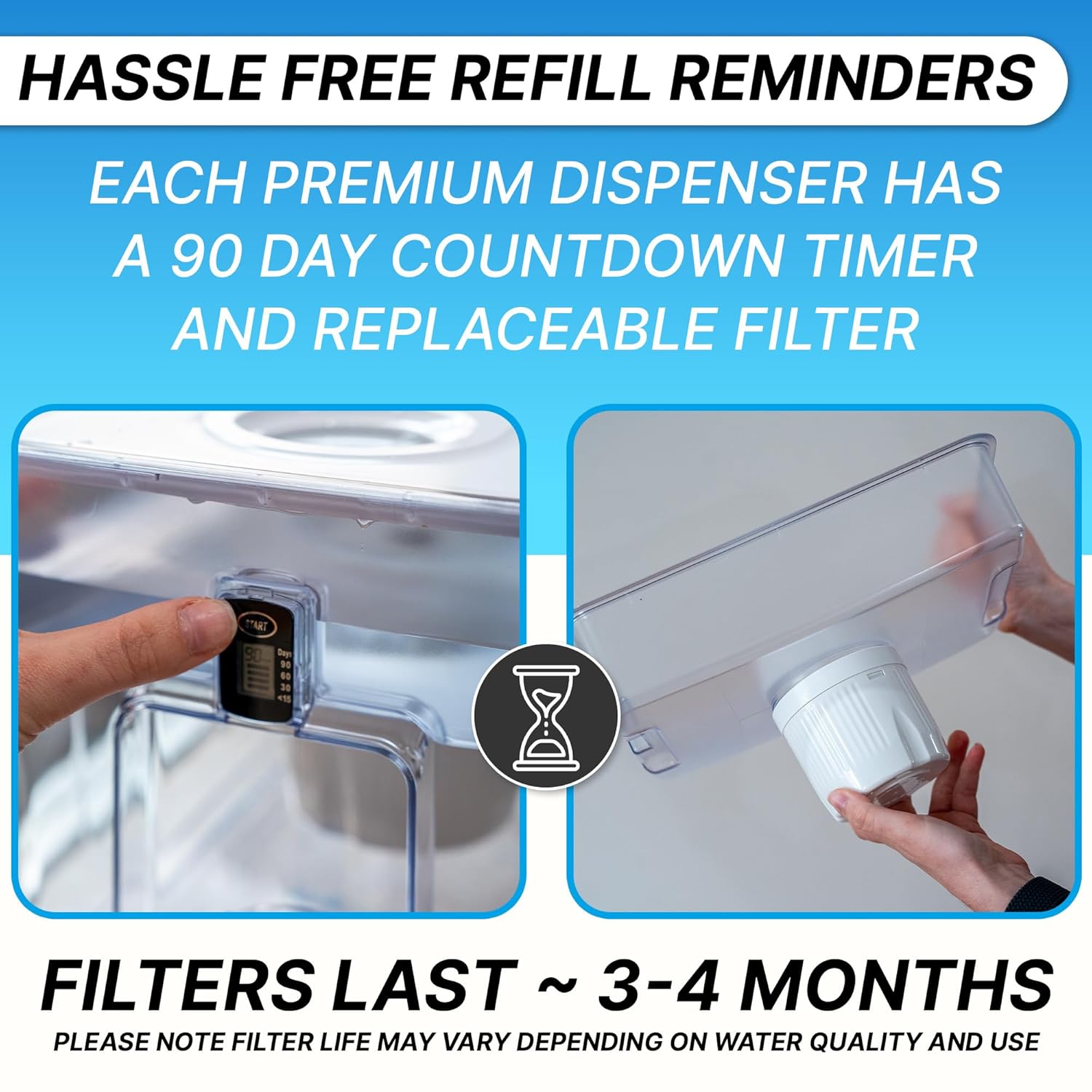
The replaceable cartridge is rated at roughly 150 gallons, which typically means fewer replacements than smaller pitcher filters. An integrated LED timer provides a 90‑day countdown reminder (runs on an included LR44 battery) to help track cartridge swaps.
Manufacturer specs note compatibility with feed waters up to about 1,000 ppm total dissolved solids (TDS), and components are BPA‑free. Routine maintenance is simple—swap the cartridge when the timer indicates or when flow noticeably slows.
Filtration Performance and Taste
In everyday use the most noticeable changes are cleaner taste, reduced chlorine odor and fewer off‑flavors from municipal treatment. The solid carbon block media adsorbs chlorine, many organic compounds and some disinfection byproducts, leaving water that tastes fresher and with more body than reverse‑osmosis‑treated water.
The unit is aimed at typical city tap water rather than heavily contaminated sources. Manufacturer testing supports reductions for contaminants like chlorine, lead and fluoride for the relevant cartridge versions. Because it isn’t an RO unit, beneficial trace minerals remain in the water.
Keep expectations realistic: flow is gravity‑fed and slower than under‑sink or faucet‑mounted filters, and new cartridges should be flushed before first use. The system does not make biologically unsafe water (e.g., sewage, untreated wells with microbial problems) drinkable—microbiological issues require additional treatment beyond carbon filtration.
Regular cartridge replacement per the rated capacity helps ensure continued taste improvement and contaminant reduction.
Real World Capacity and Maintenance
The 36‑cup reservoir holds about 2.25 gallons, which reduces how often you need to refill compared with smaller pitchers and is convenient for families who like chilled water ready in the fridge.
The cartridge’s ~150‑gallon rating will vary with feed‑water quality and household consumption. As a rule of thumb, about 1 gallon per day yields roughly five months of life, while 2 gallons per day shortens that to two to three months. New cartridges require an initial flush before use.
Because filtration is gravity‑driven, flow from the upper chamber to the lower reservoir is deliberate rather than instantaneous—expect a slower fill rate compared with pressurized or electric systems. The included 90‑day LED replacement reminder helps keep you on schedule.
Replacement cartridges are a recurring cost, so factor that into your budget and consider buying spares if your household uses water steadily. Cartridge life will be shorter with higher daily use or poorer source water quality.
Safety Features and Certifications
The manufacturer cites third‑party testing to common NSF and ANSI protocols covering taste/odor, some regulated contaminants, and select emerging contaminants. Maintaining certified performance depends on following the recommended cartridge replacement schedule.
Plastic parts that contact water are specified as food‑grade and BPA‑free, and some components are noted as recyclable. These material statements help reduce concerns about leaching, but they don’t eliminate the need for timely cartridge changes.
A technical limit to note is feed‑water quality: the system is intended for waters with TDS up to roughly 1,000 ppm, making it suitable for municipal supplies and most typical groundwater but not brackish or industrial sources. Also, gravity‑fed carbon filtration is not a reliable method for microbiological disinfection.
If you use a private well or atypical source, have the water tested for bacteria, nitrates, metals and TDS before relying solely on a countertop filter. Regular cartridge changes and following manufacturer maintenance instructions are key to preserving performance.
Ease of Use and Setup
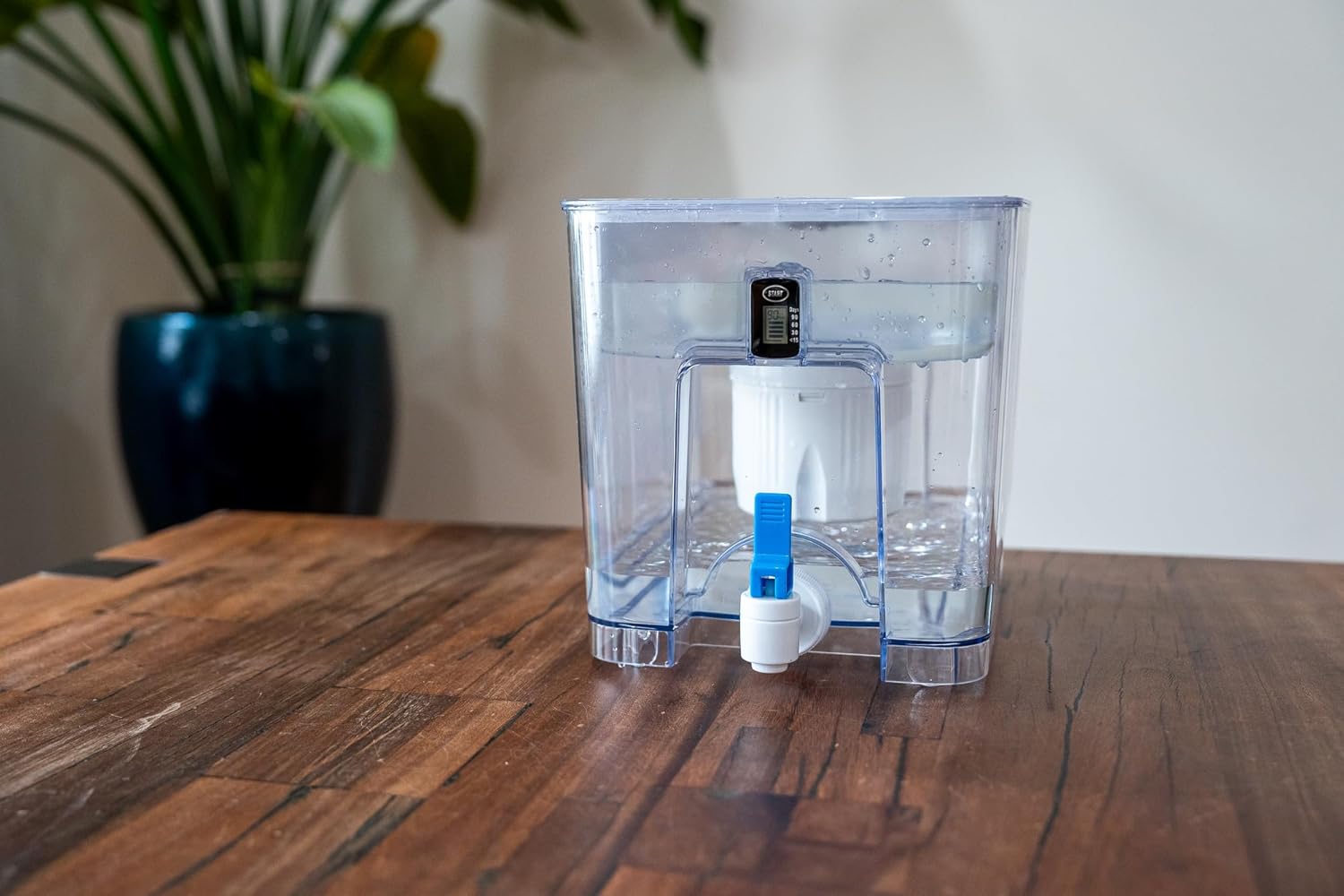
Setup is straightforward: insert the included cartridge, perform the initial flush per instructions, fill the top chamber and let gravity draw treated water into the lower reservoir. No plumbing or electricity is required, so you can place it on any counter or chill the lower reservoir in a refrigerator.
A small replacement‑timer LED comes preinstalled to help track cartridge life. The spigot is easy for adults and older children to operate, providing controlled pours without fuss.
Keep in mind a full 36‑cup unit is heavy to lift—two hands or assistance makes refilling and moving safer. Maintenance is minimal: periodic filter replacement, occasional exterior wiping, and regular refilling.
If you need instant, high‑flow dispensing or a completely hands‑off solution, a plumbed‑in system will better meet those needs; this unit excels at countertop convenience with no install required.
Pros Cons and Suitability
This countertop dispenser offers a simple, non‑plumbed way to get better‑tasting water: it holds about 36 cups, uses a solid carbon block cartridge rated for roughly 150 gallons, and is made from BPA‑free materials. The carbon block reduces chlorine, many organics and common heavy metals such as lead, and certain cartridge variants target fluoride. A built‑in filter‑life countdown makes replacements easier to track, and the design preserves naturally occurring minerals rather than stripping everything out.
Expect the usual trade‑offs for gravity‑fed systems: moderate flow compared with tapped or pressurized filters, a heavy filled unit that’s harder to move, and ongoing cartridge costs. The unit does not provide reliable microbiological disinfection and will not achieve the very low TDS produced by reverse‑osmosis systems.
Best fit scenarios are households on treated municipal supply who want a fridge‑friendly, higher‑capacity pitcher alternative that improves taste and reduces chlorine, organics and some metals without plumbing or complex installation. Avoid this approach for untreated well water, water with suspected biological contamination, or situations requiring very low TDS—those needs call for additional or different treatment technologies.
As an Amazon Associate, I earn commission on qualified purchases.