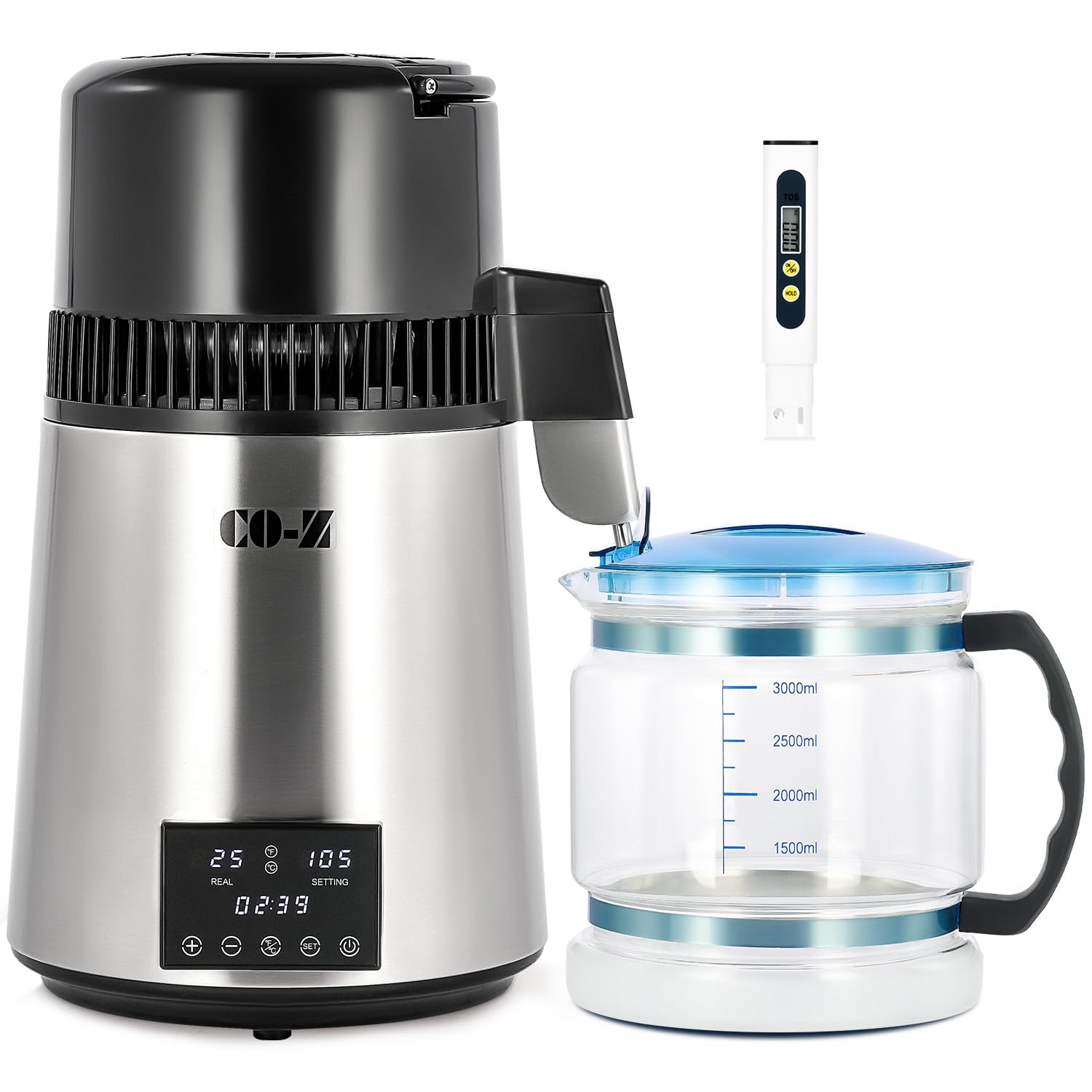
CO-Z Water Distiller 1.1 Gallon 1750W Countertop with Timer
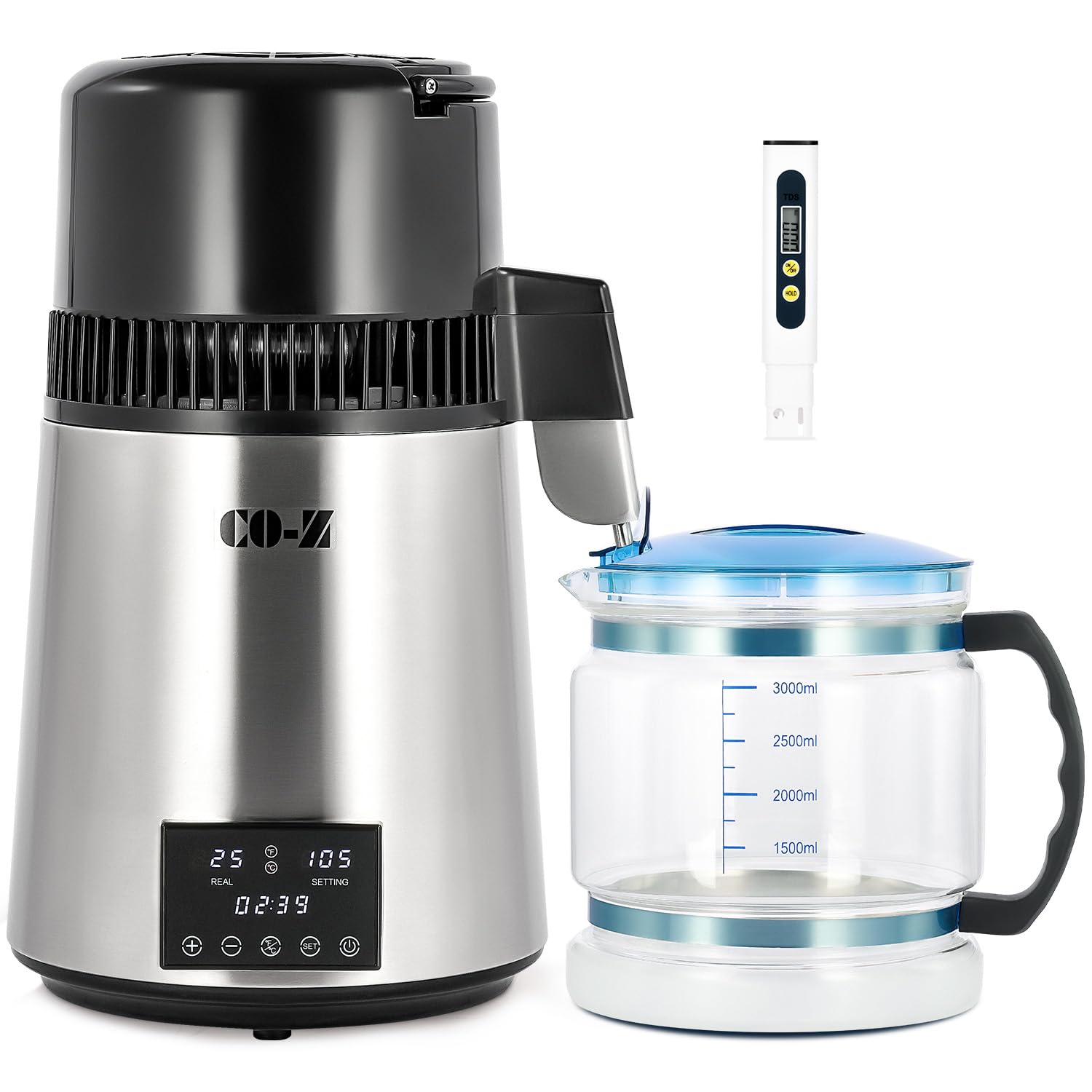
The CO‑Z 1.1 gallon countertop distiller provides on‑demand distilled water using a stainless‑steel boiling chamber and a glass collection carafe, with a dual temperature display, timer and automatic shutoff for convenient, safe operation. It’s aimed at households and small offices that want to make distilled water at home without bottled jugs, though throughput and upkeep requirements should be considered before buying.
Overview
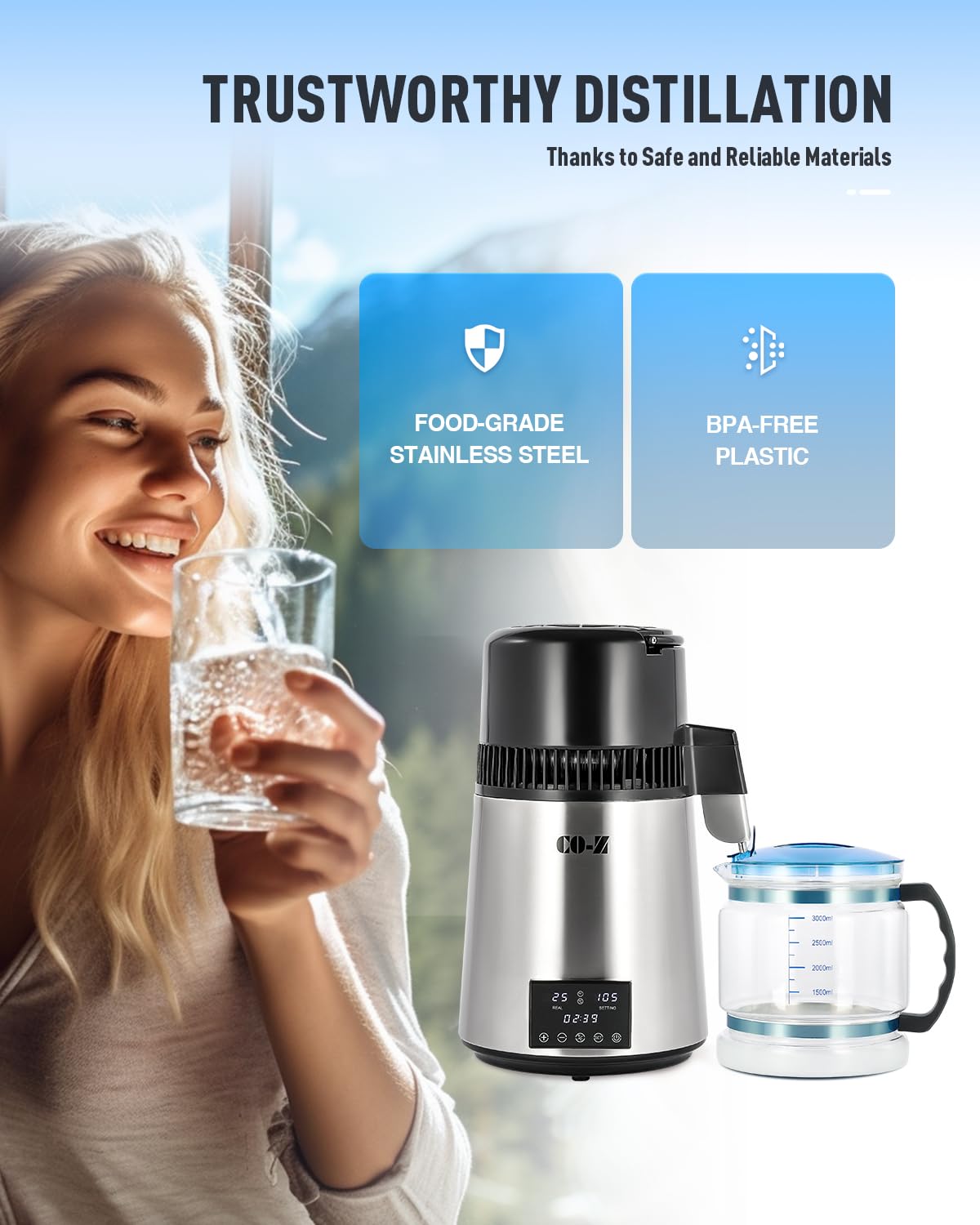
This compact countertop distiller produces distilled water by boiling and condensing input water, collecting the purified output in a glass vessel for reduced dissolved minerals and many common impurities.
Designed for a kitchen counter or small work surface, it removes the need to buy and store bottled jugs, making it useful for appliances, household tasks, or anyone who prefers a very low‑mineral water for taste or equipment protection.
The unit suits households and small offices that want independent water treatment and on‑demand distilled water; if you’re comparing options, the site’s writeup of the 1.1‑gallon 750W model may help clarify capacity and cycle time differences before you decide.
Key Features
The core design is a closed boiling‑and‑condensing system that minimizes handling of finished water. Using a glass collection carafe keeps the distilled water from contacting plastic, preserving clarity and taste.
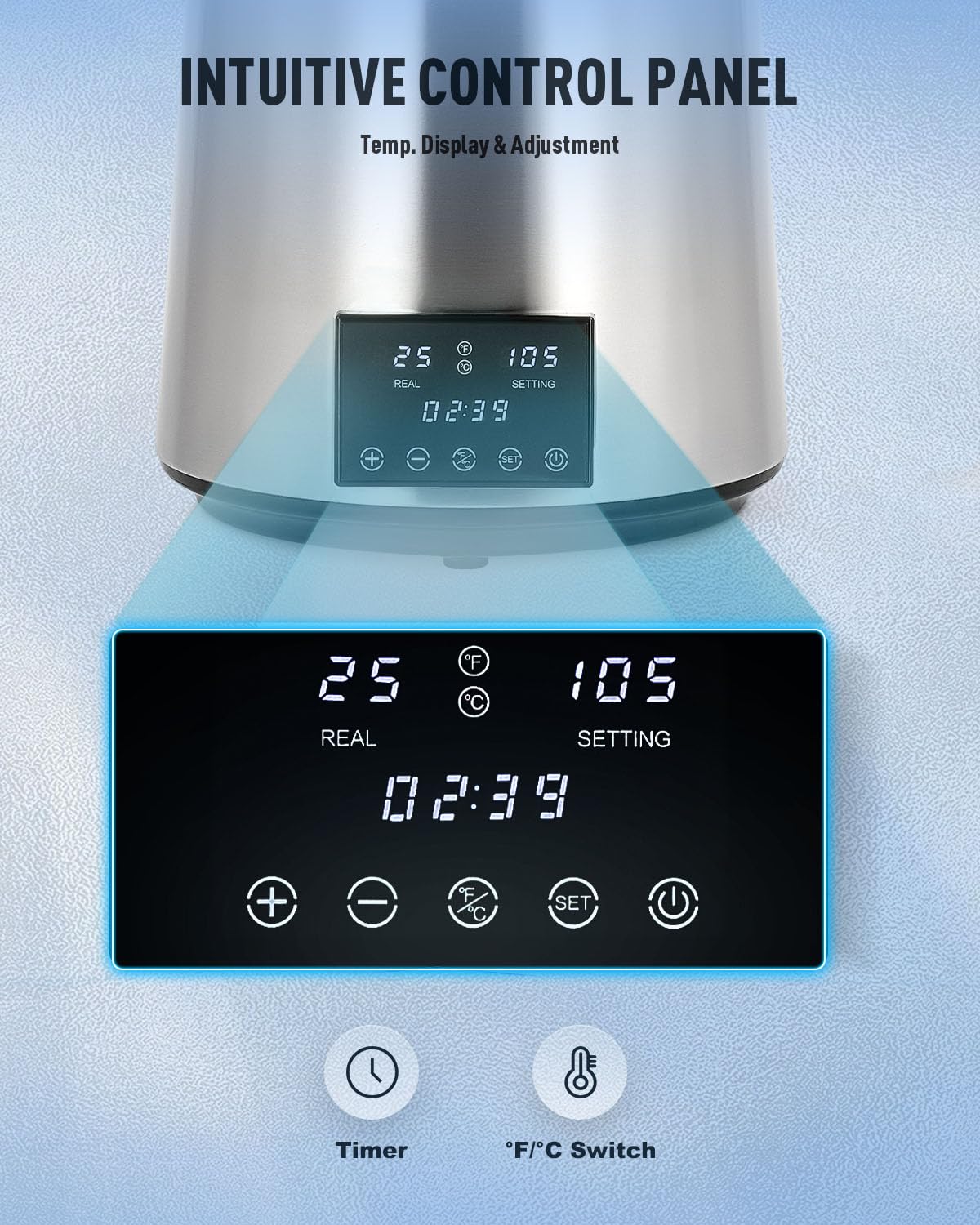
Controls include a temperature readout and a programmable timer so you can monitor cycles and schedule batches to match your household or office needs, simplifying routine use.
Construction centers on durability and countertop convenience: the boiling chamber is stainless steel for corrosion resistance and parts are arranged for accessible cleaning. If you’d like to see a related configuration with a different finish, check the comparison of the brushed stainless countertop distiller to understand material and accessory differences.
Real-World Performance
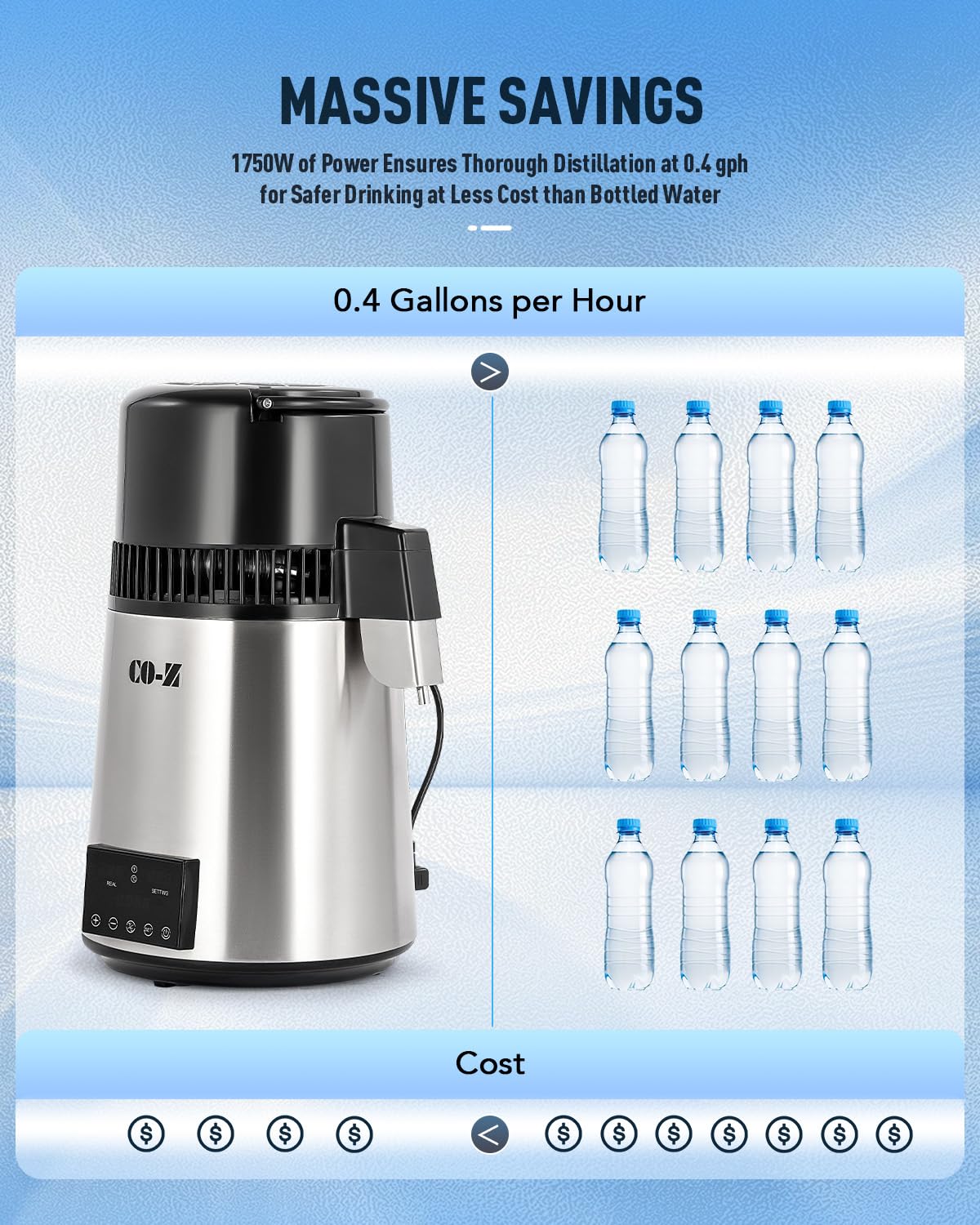
In everyday use the distiller produces neutral‑tasting water free of the flavors associated with chlorinated tap water. The glass carafe and stainless‑steel boiling chamber help preserve taste and make mineral buildup easy to inspect; final clarity and purity will still depend on your source water and any post‑treatment you choose.
Operation is simple: fill the reservoir, set the timer or temperature readout, and run the cycle. Boiling noise is noticeable but typically within normal kitchen background levels; run time and perceived loudness vary with water hardness and model specifics.
Limitations include daily throughput and refill needs—this is ideal for home or small‑office volumes rather than continuous large production. Routine descaling is necessary to maintain efficiency, and the glass carafe must be handled carefully to avoid damage.
Ease of Use and Maintenance
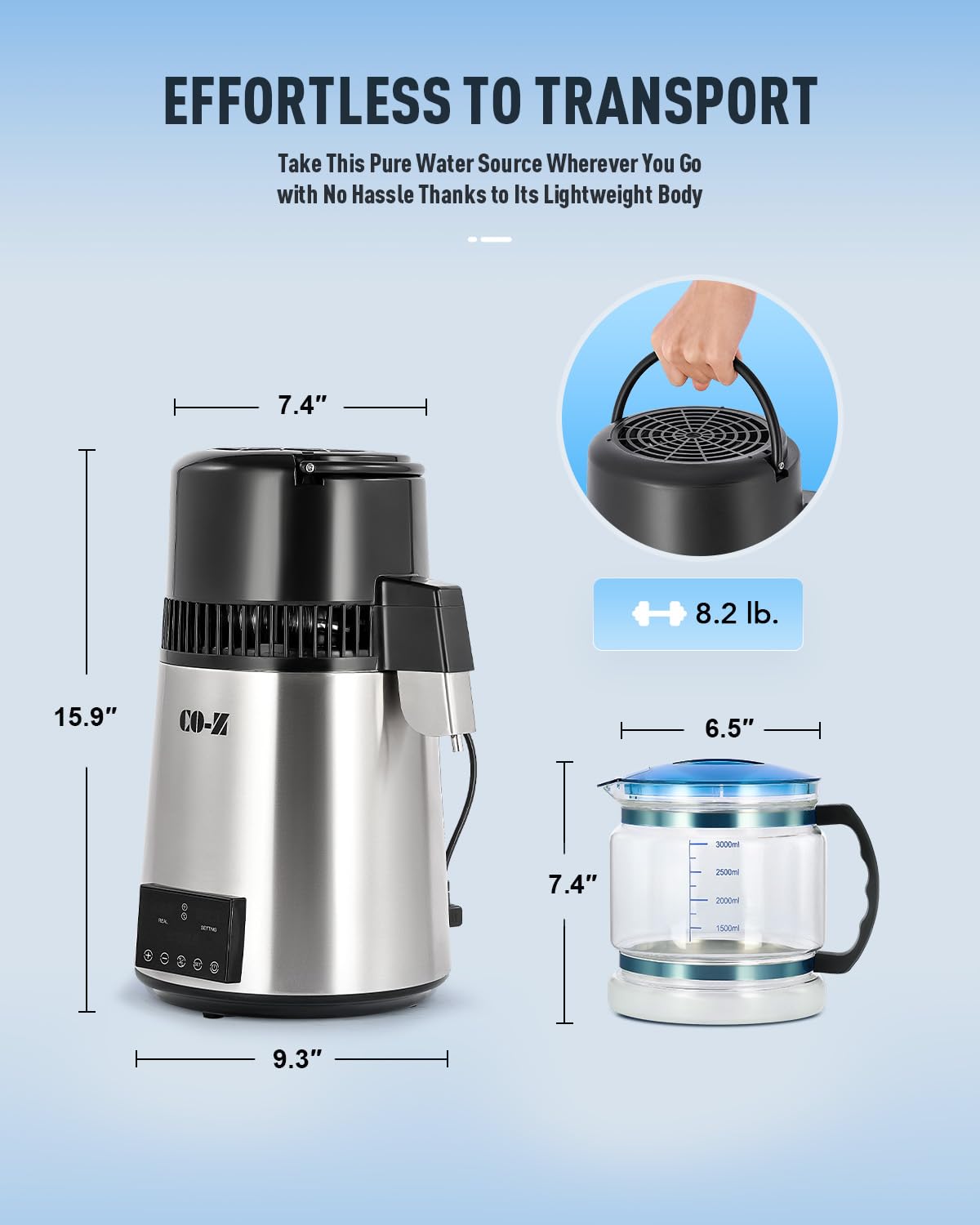
Setup is straightforward: place the base on a level surface, seat the glass carafe, and follow the quick‑start steps in the manual. Run an initial cycle and discard that first batch to flush any factory residue before drinking.
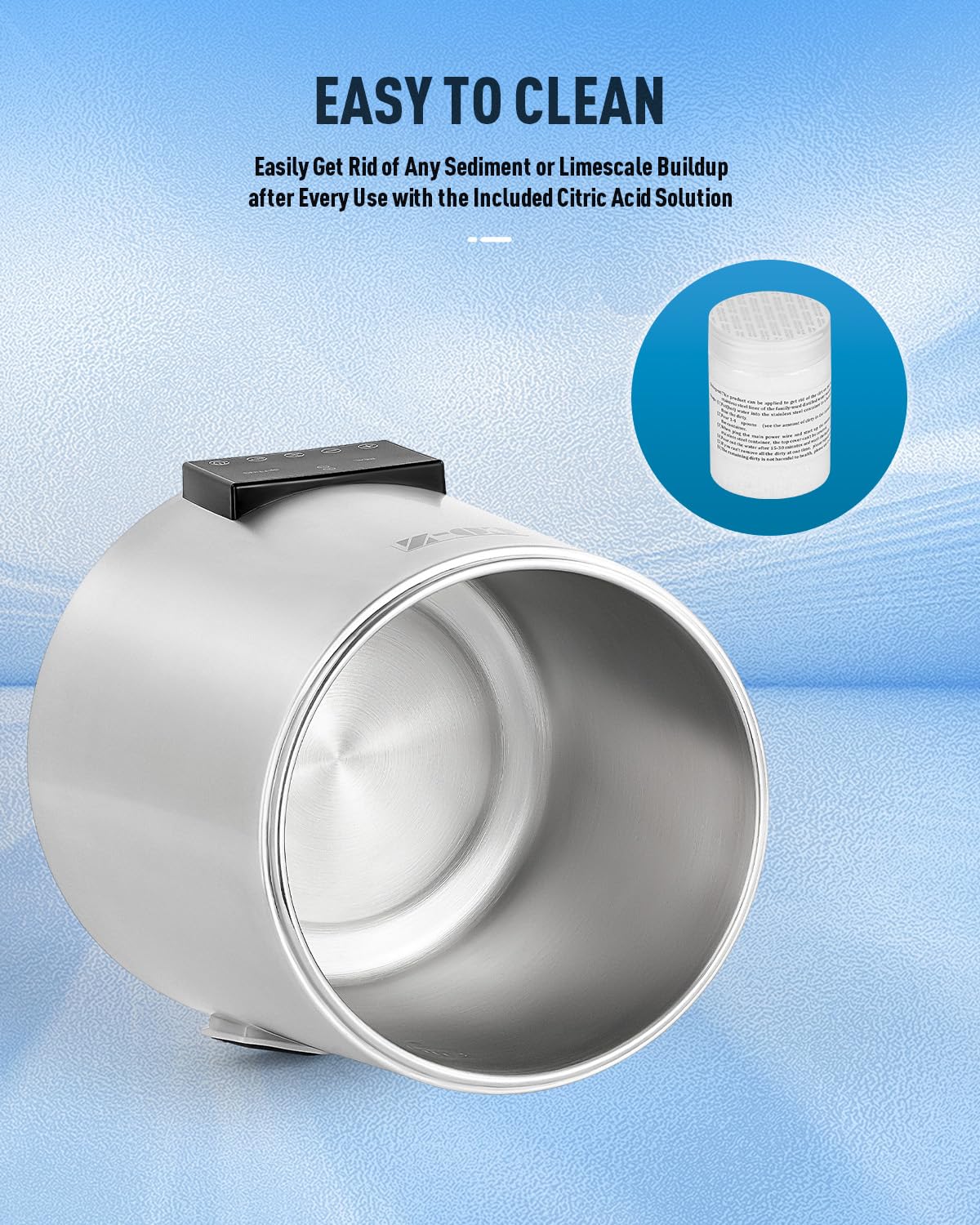
Daily upkeep is minimal but important—rinse and hand‑wash the glass container with mild detergent and avoid abrasive pads. The boiling chamber will build scale over time; follow the manufacturer’s descaling recommendations based on your water hardness and usage.
Long‑term care includes checking and replacing any filters or carbon cartridges per the schedule specified by the manufacturer, wiping the exterior with a damp cloth, and storing the unit dry when not in use to extend service life.
Pros and Trade-Offs
Strengths include very pure finished water and material choices that minimize plastic contact—the glass carafe and stainless‑steel chamber reduce off‑flavors and simplify inspection. The readouts and timer make monitoring and scheduling easy for home or office use.
Trade‑offs are the slower process compared with point‑of‑use filters or bottled water, ongoing electricity use and heat/noise during operation, and the limited daily output that may not suit heavy‑use environments.
Maintenance costs can include descaling supplies and occasional filter or cartridge replacements on some versions, and upfront cost is higher than simple pitchers—though long‑term value depends on how often you use the machine.
Also note distilled water is essentially mineral‑free; that’s ideal for many appliances and tasks but may taste flat to people used to mineralized waters, so consider that when deciding if this suits your needs.
Who This Product Is For
This unit fits households and small offices that need a steady source of distilled water for appliances or routine tasks, and for people who prefer a glass collection container and stainless‑steel components for easier cleaning and neutral taste.
Hobbyists and DIYers with small‑scale needs—cleaning delicate items, certain plant propagation steps, or informal lab‑style projects—may find this practical when purity matters but industrial quantities do not. For certified lab‑grade water or highly specific chemical properties, confirm the model meets those standards before relying on it.
If you need very large daily volumes, want mineralized drinking water, or require instant on‑the‑go water without a processing cycle, other treatment methods will be a better fit than this distillation approach.
As an Amazon Associate, I earn commission on qualified purchases.