PUR 7-Cup Water Pitcher, 1 Genuine Filter, Cleaner, Great-tasting Water, Dishwasher Safe, Powerful, Faster Filtration, LockFit Cap Design – Blush Review
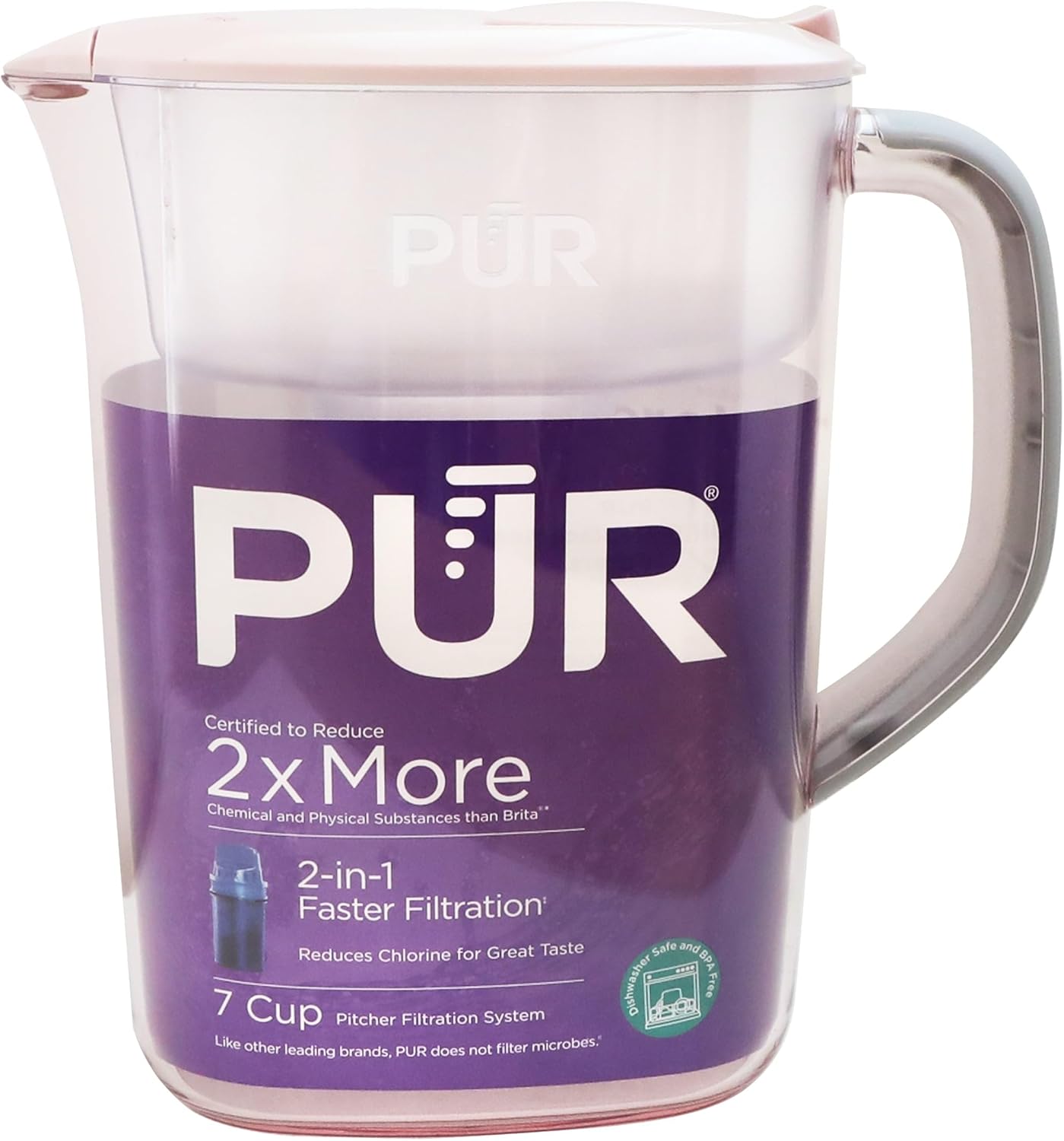
This slim, seven-cup pitcher is a practical, refrigerator-friendly option that focuses on steady daily filtration rather than design flourishes. It uses a dual‑media cartridge to reduce chlorine taste and certain metals, improves beverage flavor in typical municipal tap water, and requires periodic cartridge replacement (about 40 gallons per filter). Keep in mind it does not provide microbiological protection and is best suited for treated water sources.
Design and build quality
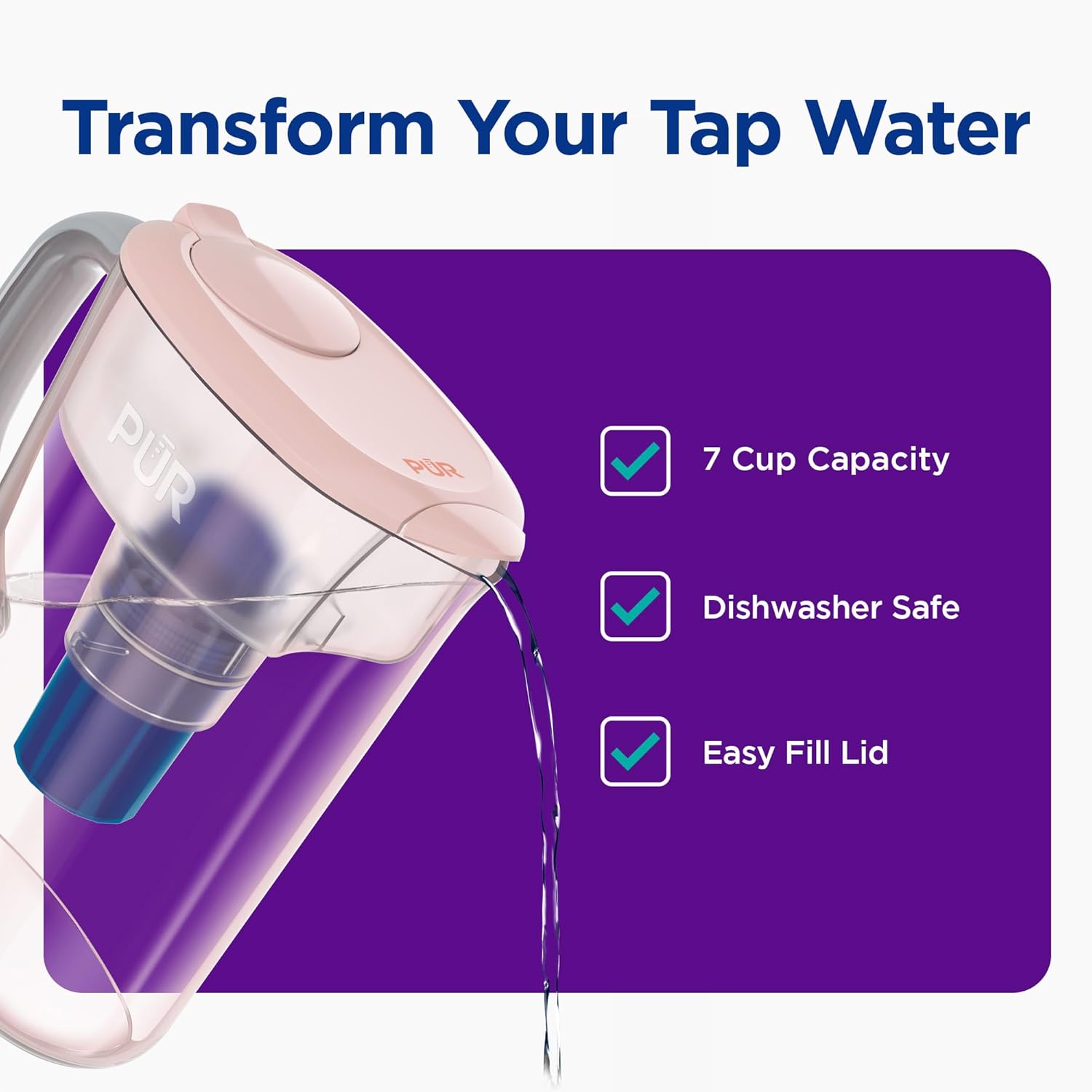
The pitcher takes a compact, no‑nonsense approach: a slim, squared footprint that’s intended to sit easily on refrigerator shelves and take up minimal counter space. Its roughly seven‑cup capacity balances daily household needs without making the unit bulky or hard to store.
A locking lid keeps the filter firmly seated while pouring, and the top includes an easy‑fill opening so you can add water without fully removing the cover. Materials are practical rather than decorative: an opaque upper reservoir conceals the filter area while a translucent lower chamber makes it simple to check water level.
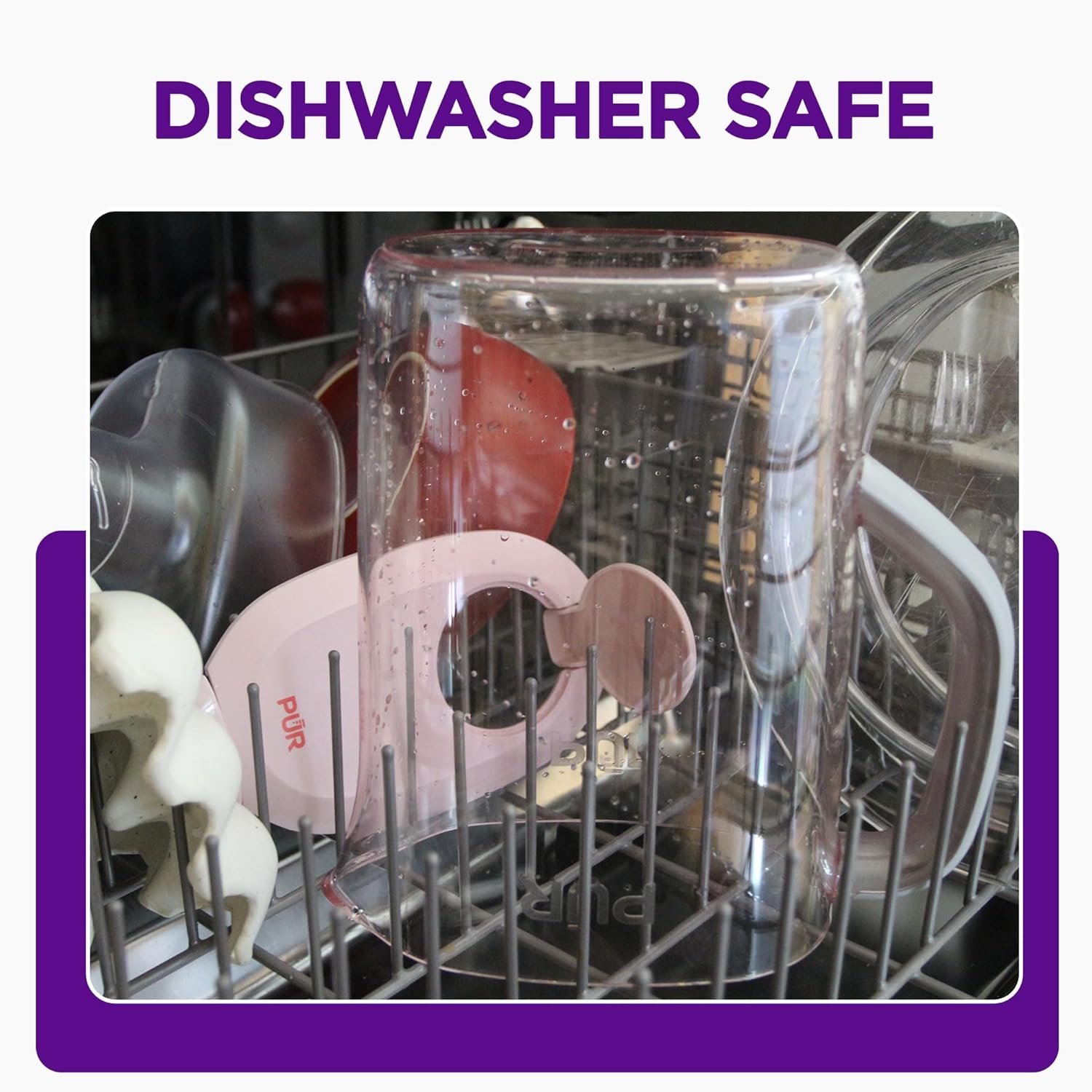
Overall the build feels stable yet lightweight, with parts that are dishwasher‑compatible for easier cleaning. This is a utilitarian pitcher designed for steady household filtering rather than as a countertop accent piece.
Filtration performance and certifications
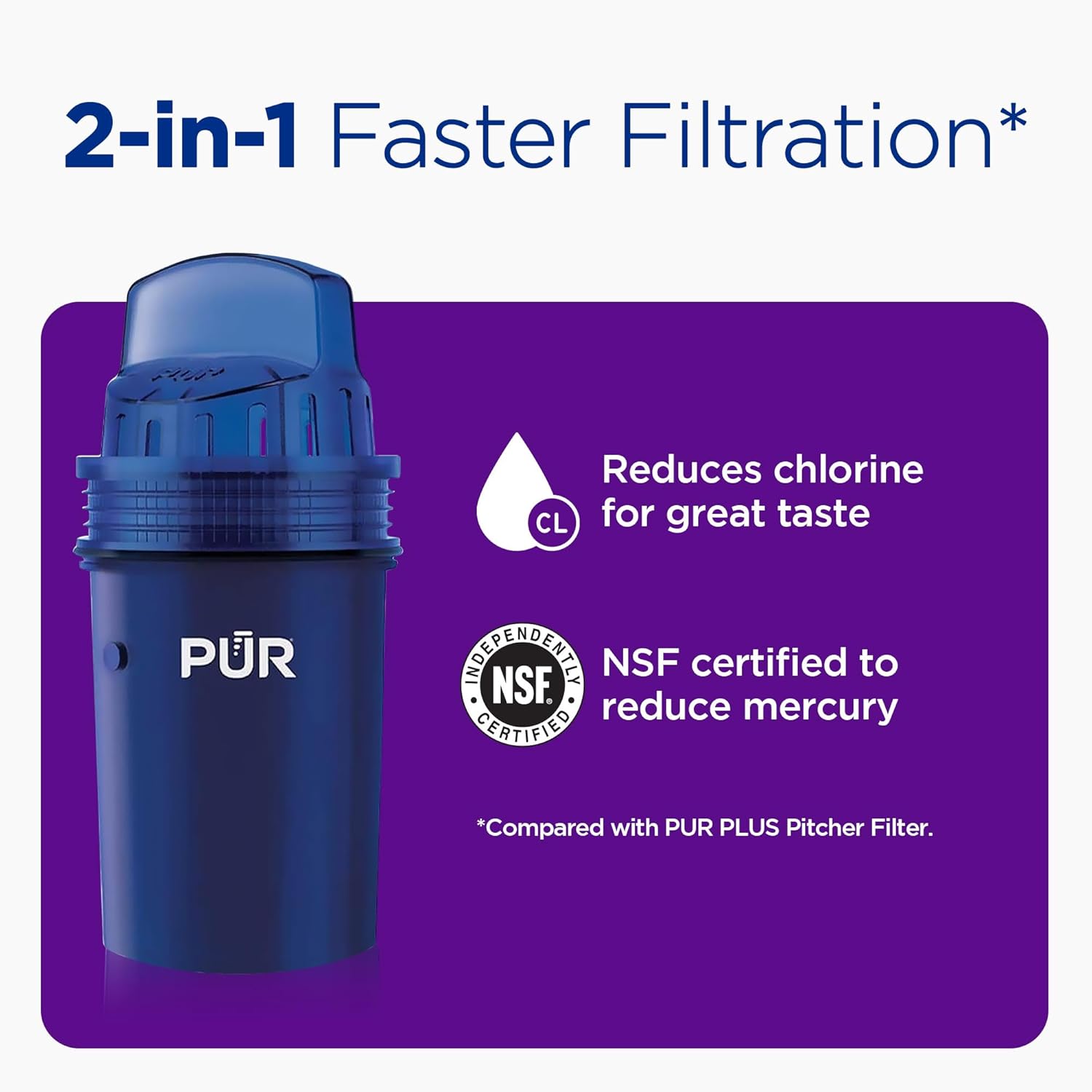
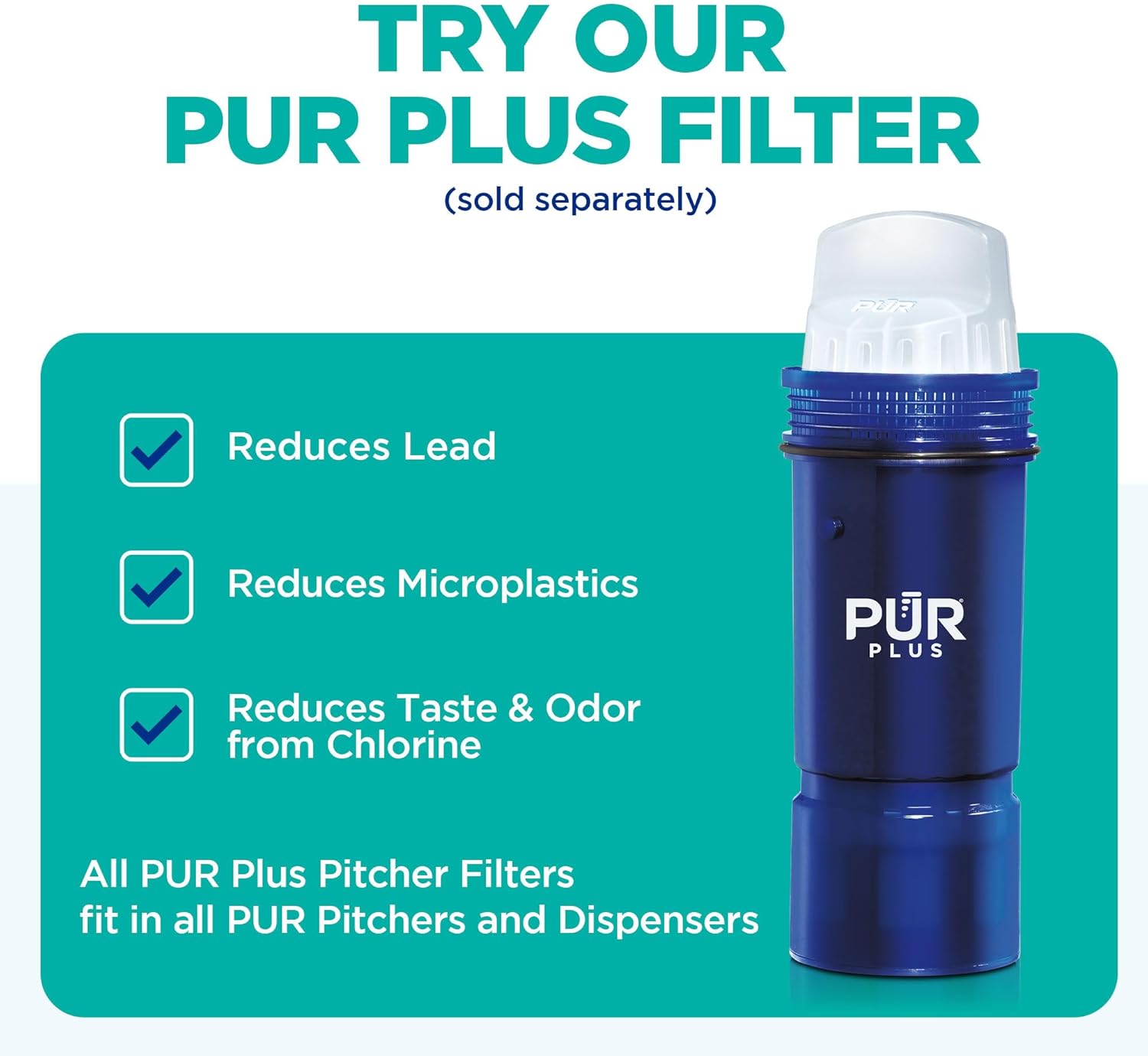
The cartridge uses a dual‑media approach (activated carbon plus ion‑exchange materials) to target common chemical and physical contaminants in treated municipal water. In everyday use it noticeably reduces chlorine taste and odor and tends to soften metallic or chlorinated notes, producing water that most people find cleaner and better tasting than untreated tap water.
The manufacturer lists third‑party certifications to support reduction claims for chlorine and certain metals, and the cartridge also captures some particulate material including microplastics. Cartridge life is rated at roughly 40 gallons, which typically equals about two months of normal household use; a built‑in filter‑life indicator on the lid helps you know when it’s time to replace the cartridge.
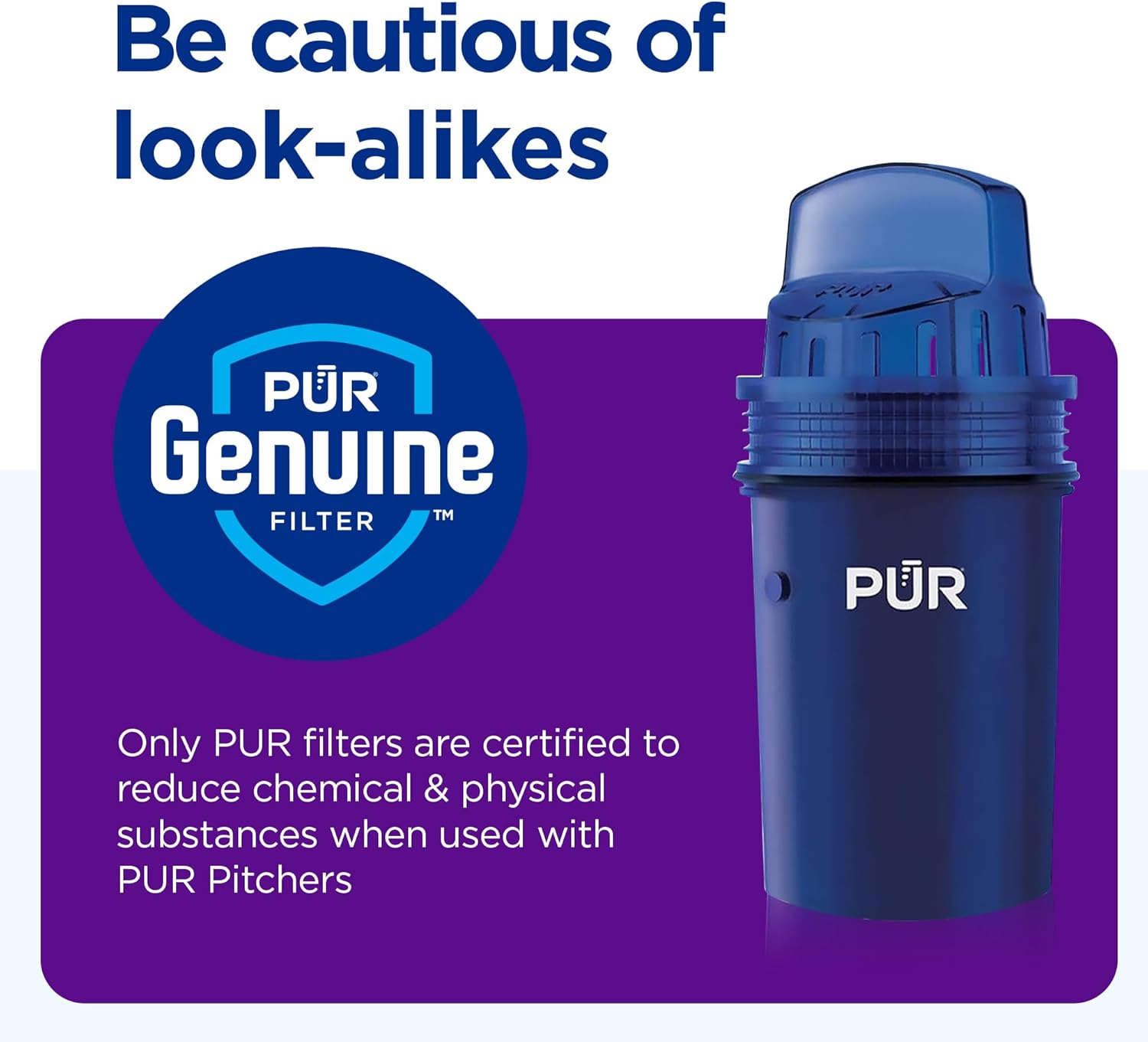
Replaceable cartridges are simple to swap and the pitcher components are easy to clean. Important limitation: this system does not disinfect microbiological contaminants and should not be relied on to make unsafe source water free of bacteria, viruses, or protozoa.
Taste and real world use
In everyday use the pitcher noticeably improves flavor when tap water has chlorine or faint metallic notes. After the initial break‑in and a quick rinse of the new cartridge, differences in taste and aroma become apparent: coffee and tea taste cleaner and plain water has a smoother finish.
Users commonly report that subtle off‑flavors are reduced rather than eliminated, so results are best with municipal water where chemical tastes are the primary concern. The pour‑while‑filtering lid makes frequent refills convenient and filtration is relatively quick compared with older gravity pitchers.
Routine maintenance is straightforward: rinse the reservoir and lid periodically and remove the cartridge when you run compatible parts through a dishwasher if you choose (the filter itself should not be washed). Replacement cartridges are consumables — expect to swap them according to the manufacturer’s recommendations and factor that into ongoing cost.
Ease of use and maintenance
Getting the unit ready is straightforward: unpack, snap the cartridge into place and fill the reservoir through the top‑fill opening. The LockFit‑style cover and seating design help keep the cartridge secure while pouring, reducing the chance of shifting or leaks.
Cleaning is low‑effort; many parts are labeled dishwasher‑safe (top‑rack), which speeds routine washing. Hand washing the lid and cartridge housing can extend seal life and avoid wear from high‑heat cycles.
No electrical hookup or complex installation is required, making the unit easy to move between a dorm room, office, or recreational vehicle. Ongoing maintenance mainly means replacing cartridges at the recommended interval and doing occasional cleaning of the body.
Capacity fit in fridge
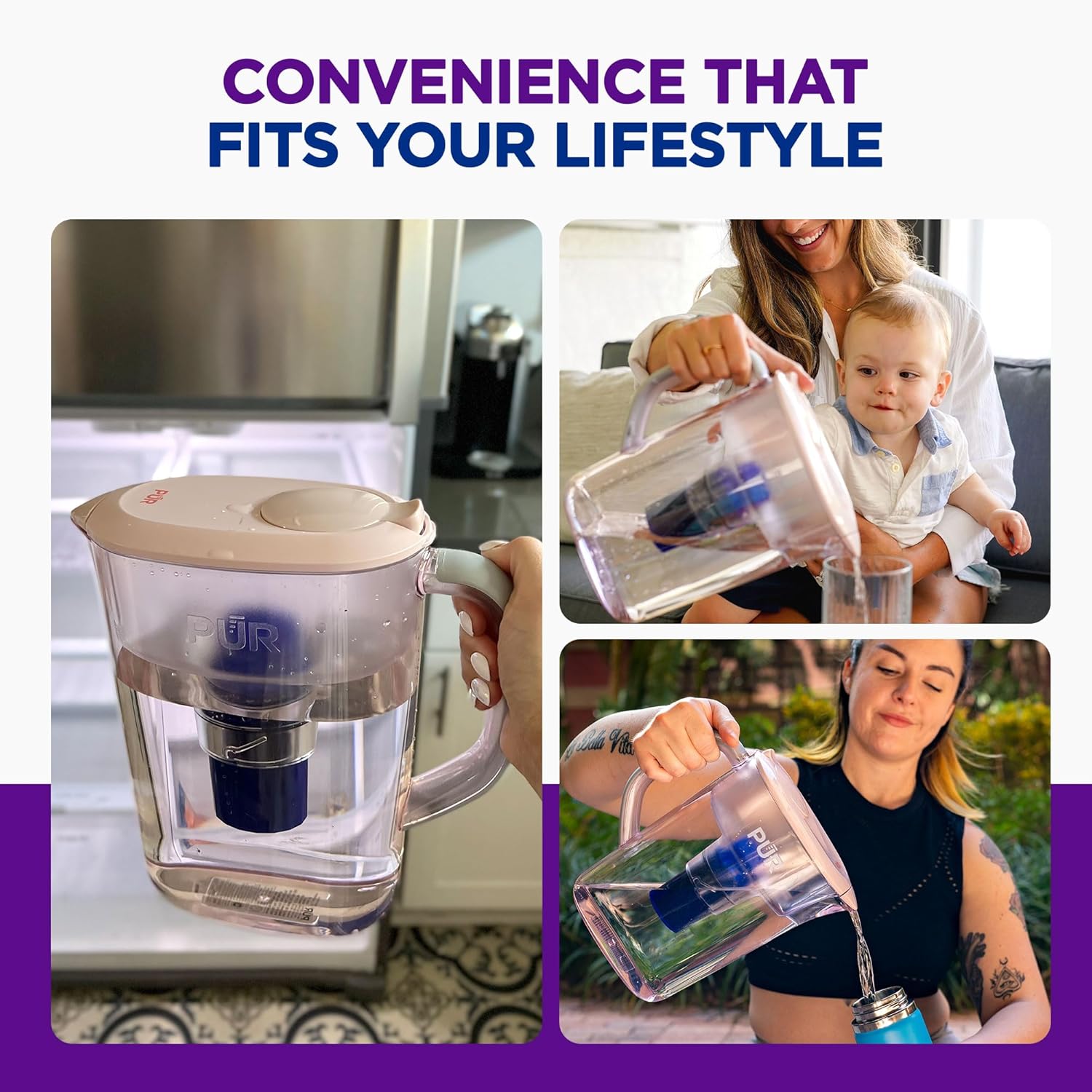
The pitcher holds seven cups (about 56 fl oz), which strikes a practical balance between useful storage and a compact footprint. That volume is enough for several servings of water, making it convenient for an individual or a couple to keep chilled water on hand without taking up a lot of shelf space.
Its slim, upright profile and square‑ish footprint are intended to slide into a refrigerator door shelf or sit alongside other containers without blocking access. Because capacity is moderate, larger households will need to refill more often than with larger jugs, but the shape helps avoid wasted space.
Environmental and cost considerations
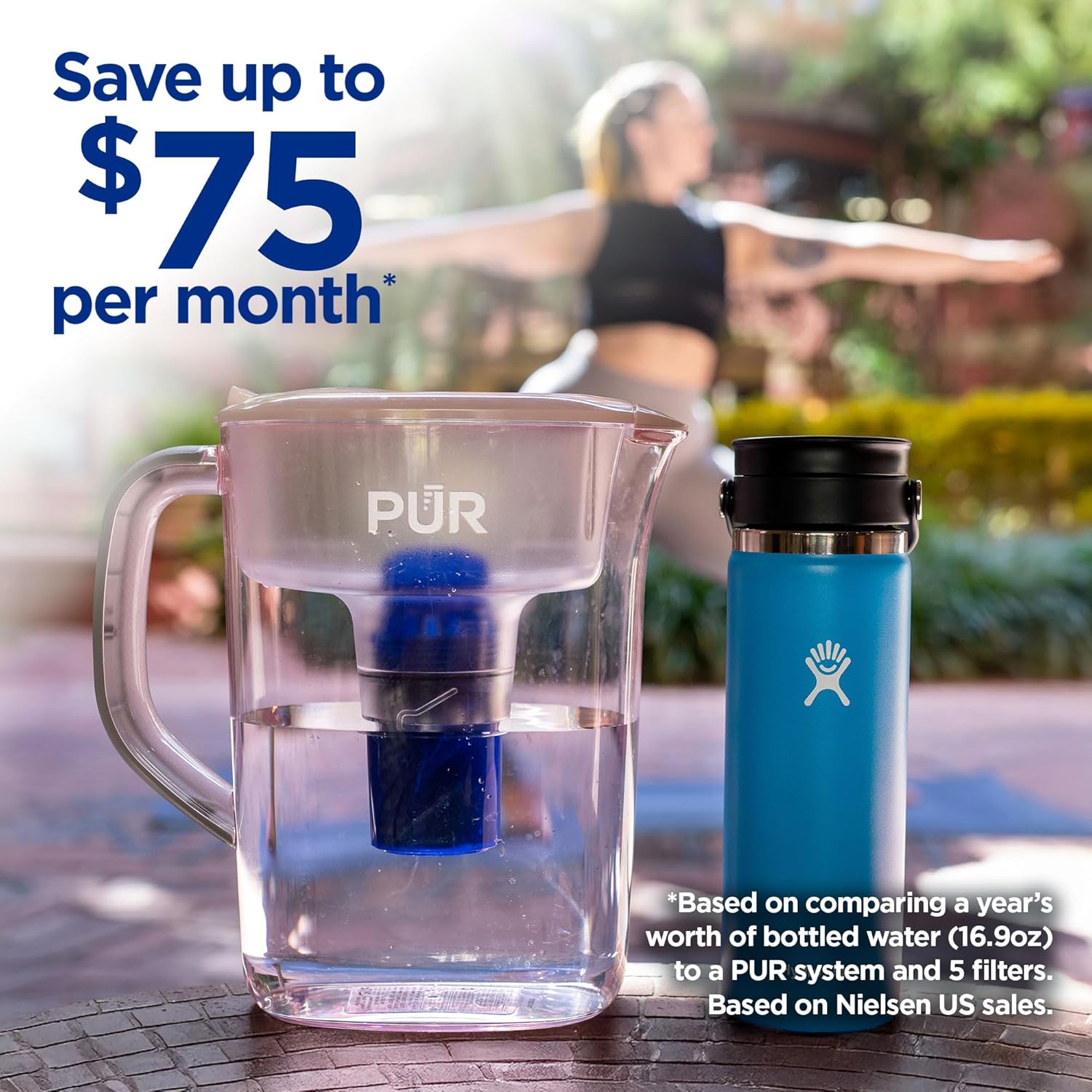
Using a refillable pitcher cuts reliance on single‑use bottled water and can substantially reduce plastic waste when it replaces frequent bottle purchases. Because the pitcher runs on gravity filtration and requires no electricity, its day‑to‑day environmental footprint is low compared with repeatedly buying bottled water.
Filters are generally rated for about 40 gallons before replacement, so households get a predictable interval for when cartridges are needed. Ongoing costs are mainly replacement cartridges and occasional cleaning supplies; compare per‑filter prices and multipack options to estimate long‑term expense.
From an environmental perspective, reduced bottle consumption and low energy use are positives, but filter disposal and sourcing still matter. Consider asking retailers or the manufacturer about take‑back or recycling options for spent cartridges when assessing overall impact.
Limitations and suitability caveats
The primary limitation is that this pitcher does not provide microbiological protection and is not designed to remove bacteria, viruses, or protozoa. It should not be used to treat untreated or contaminated source water such as untreated wells or surface water.
The seven‑cup capacity is convenient for one or two people but will require frequent refilling for larger households or when serving guests. Cartridge life and replacement availability are ongoing considerations, and the pitcher is not a substitute for whole‑house systems, reverse‑osmosis units, or specialized treatments that address a wider range of contaminants.
As an Amazon Associate, I earn commission on qualified purchases.