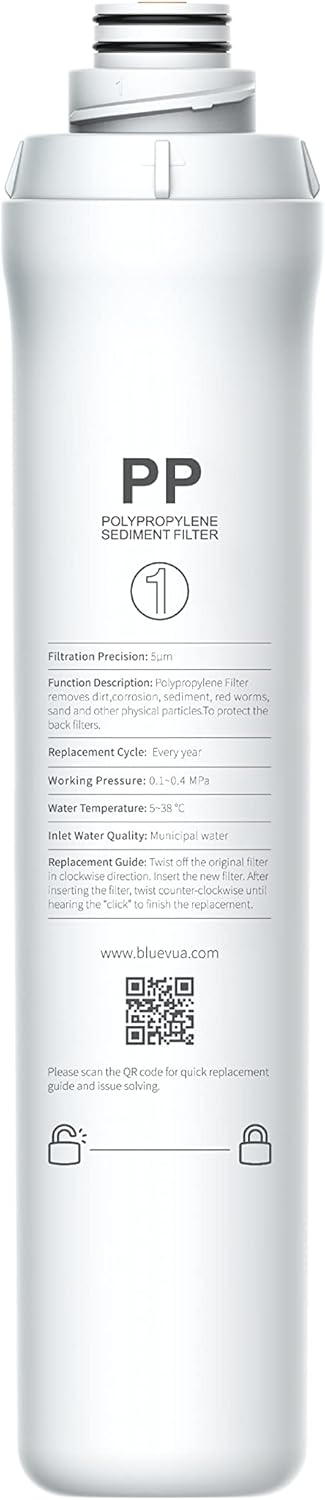
Bluevua ROPOT PP Filter Replacement 1-Year 1st Stage
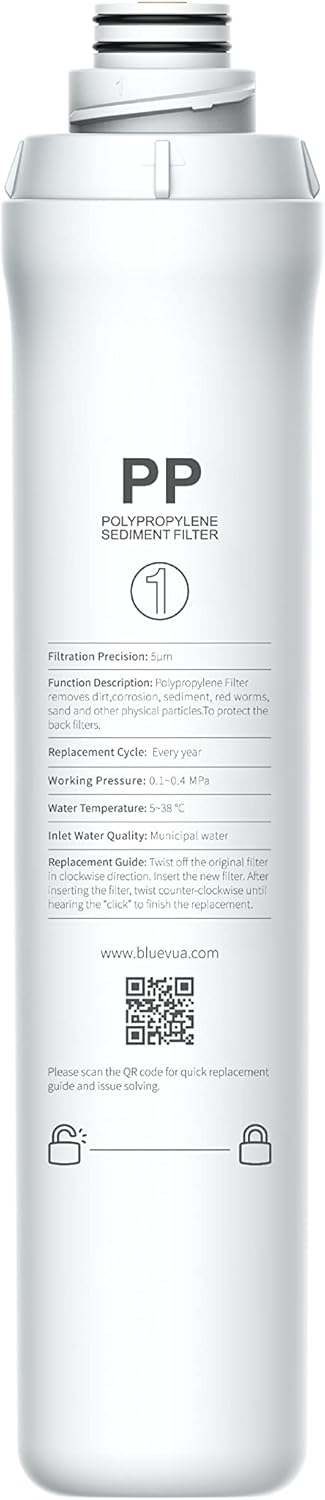
The Bluevua ROPOT PP Filter is a simple, first-stage polypropylene sediment cartridge designed to trap visible particles and protect downstream RO components. It uses a five-micron media, claims a 12‑month service life, and aims to make routine swaps quick and straightforward.
Overview
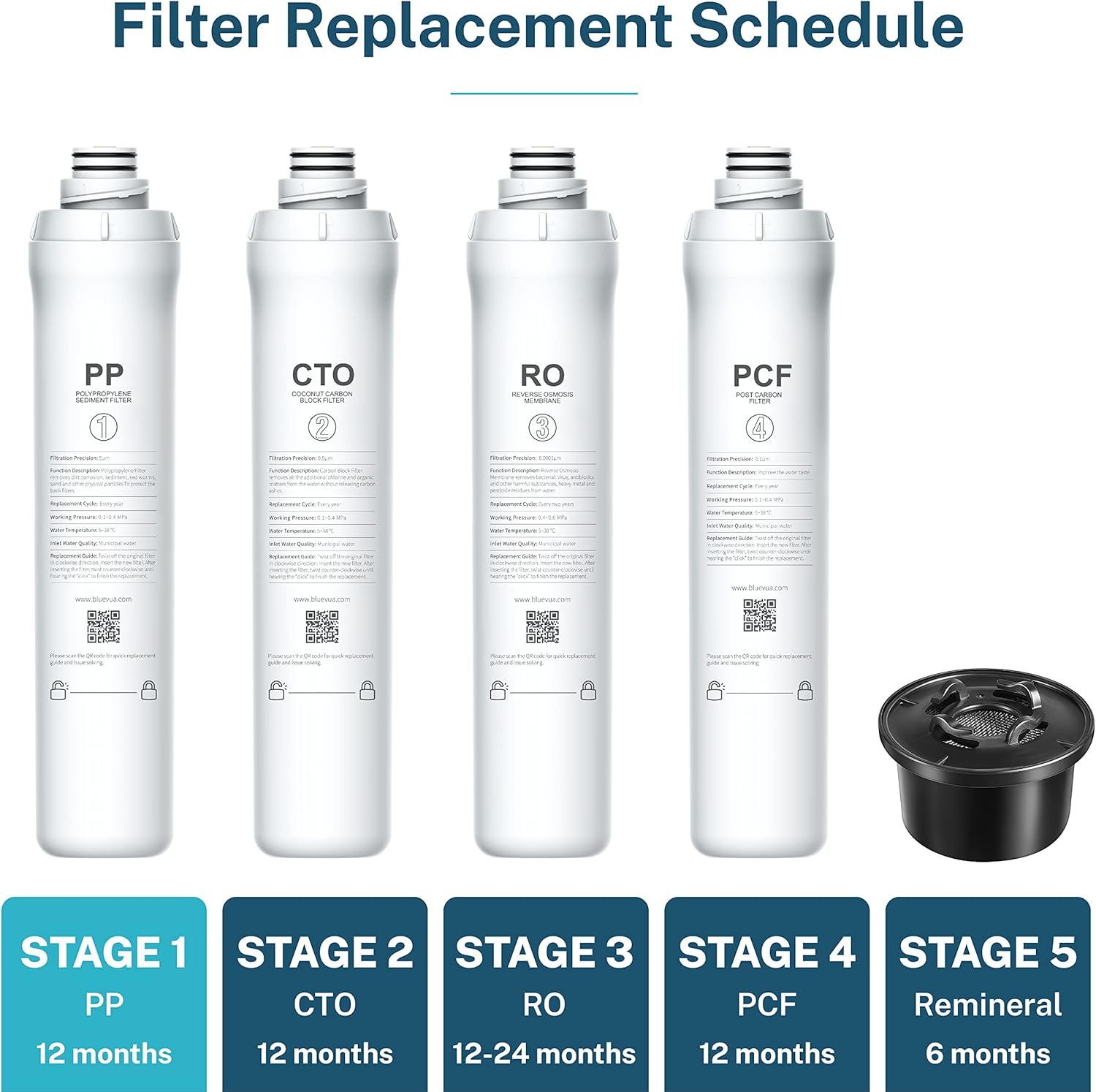
This is a polypropylene sediment cartridge designed to serve as the first filtration stage in under-sink reverse osmosis systems. It functions as a pre-filter to capture visible particles and larger debris before water reaches finer filters and the membrane.
In everyday use it helps reduce cloudiness and protects downstream components from sand, rust, and suspended solids that can shorten the life of more expensive filter stages. That protection can help maintain consistent flow and reduce the frequency of more costly replacements.
It’s aimed at homeowners and renters who rely on point-of-use purification and who perform routine maintenance on their plumbing. How often the cartridge needs changing varies by model/version and local water quality, so replacement intervals depend on usage and incoming water conditions. If you want background on compatible housings and the RO100ROPOT line, see the Bluevua RO100ROPOT review for more system-level context.
Key Features
The first-stage sediment element uses polypropylene media to trap visible particles like sand, rust, and silt before they reach finer stages. That upfront protection helps downstream membranes run more efficiently and prevents early clogging, which matters for both water quality and ongoing operating costs.
Installation is intended to be straightforward: the cartridge form factor and end fittings are made for quick swap-outs during routine maintenance. Compatibility can vary by model/version, so confirming the correct fit for your housing before purchase avoids installation headaches.
Performance in real-world use depends on local water conditions and usage patterns. In heavier sediment areas the filter will load faster, while softer sources will extend service life; replacement intervals will therefore vary by model/version and household needs. For a look at how this stage works with a later carbon stage, check the review of the Bluevua PCF 4th-stage replacement.
Real-World Performance
In everyday use this polypropylene sediment cartridge does what a first-stage element is designed to do: it captures visible particles and cloudiness from the feed water so downstream membranes and carbon stages see less debris. Most users notice clearer-looking water at the pre-treatment stage and fewer early clogs in subsequent filters when the cartridge is functioning as intended.
Under typical household conditions it helps preserve the life and efficiency of the rest of the system, though actual longevity and effectiveness depend heavily on incoming water quality and how much water the system processes. In very turbid or sediment-heavy supplies the element will load up faster and need earlier replacement; in cleaner feeds it can last longer between changes.
Limitations are important to keep in mind: this stage does not address dissolved minerals, chemical contaminants, or microbiological threats. Expect a modest effect on preservative performance rather than on taste or dissolved solids, and plan maintenance based on observed pressure changes and clarity rather than fixed intervals, since replacement needs vary by model/version.
Ease of Use and Maintenance
Installation is straightforward for most reverse-osmosis systems: shut off the feed water, relieve pressure, open the first-stage housing, swap the old cartridge for the new one and reseal the housing following the system manual. Basic hand tools and a clean workspace are usually all that’s needed, and keeping the unit’s instructions handy helps avoid common mistakes like misaligned O-rings or overtightening the housing.
Cleaning the housing and inspecting seals when changing the cartridge makes upkeep easier over time. Wiping the interior, checking O-rings for cracks, and lightly lubricating them with a food-grade silicone lubricant can prevent leaks. After installing a fresh cartridge, flush the system until the water runs clear to purge trapped air and manufacturing residues.
How often a replacement is needed varies by model/version and by local water quality and household use. Watch for signs like reduced flow or a change in taste or odor as practical cues that service is due. Keeping a spare cartridge and a small kit with replacement O-rings on hand simplifies routine maintenance and helps avoid unexpected downtime.
Pros and Trade-Offs
As a dedicated sediment cartridge, this replacement works primarily to trap sand, rust, and other visible particulates before they reach downstream stages. Users can expect clearer pre-filtered water and reduced wear on finer membranes when the cartridge is properly matched to their filtration system. The design is straightforward, which usually means a simple swap during routine maintenance and compatibility with common housings—confirm fit for your specific unit beforehand.
On the other hand, this type of element does not address dissolved chemicals, tastes, or microorganisms, so it won’t replace carbon blocks or membrane stages that handle those issues. Its effectiveness and service interval depend on incoming water quality and system configuration, so frequency of changes and actual lifespan vary by model/version and local conditions. Some buyers also note that cost effectiveness depends on how heavily the cartridge is used and how easy replacement parts are to source.
For practical buying decisions, weigh the value of protecting more expensive downstream components against the recurring cost and disposal needs of regular replacements. If your feed water has visible sediment or high turbidity, a reliable first-stage cartridge can extend the life of the rest of the system; if your primary concern is taste or dissolved contaminants, plan to pair it with appropriate subsequent stages or consider a replacement bundle like the Bluevua 4-pack replacement filter set for convenience.
Who This Product Is For
This cartridge is a good fit for owners of reverse-osmosis systems that need a straightforward first-stage sediment replacement. If you maintain an under-sink or countertop RO setup and prefer simple, plug-and-play swaps rather than complex retrofits, this will meet routine maintenance needs—compatibility varies by model/version, so confirm your system’s cartridge type before buying.
It also suits households and small offices that prioritize clear, particle-free feed water into the later filtration stages and want a low-effort part they can install themselves. People who prefer to keep their system performing as intended without professional service will appreciate a basic, easy-to-change sediment element that prevents premature clogging of downstream membranes.
Skip this option if your system requires a different cartridge size or filtration media, if you need combined multi-stage cartridges, or if you’re looking for specialty treatment (for example, targeted contaminant removal beyond sediment). It’s not the best choice for users who don’t have a compatible RO unit or who expect a universal fit across all makes and models. For more context on the RO100ROPOT family and related replacements, see the full Bluevua RO100ROPOT replacement filter review.
As an Amazon Associate, I earn commission on qualified purchases.